
Loneliness
(From the Chinese of Liu Fang-ping, 742-779 AD)
The day is past, and twilight steals across the darkened window screen.
Within the lady’s gilded home she dabs her teardrops all alone.
The empty courtyard lies all still. Attendant to the passing spring
the pale pear-blossoms fail and fall. She knows that no-one, now, will call.
Tears
(From the Chinese of Li Bai, 701-762 AD)
The beauty at the window lifts high the beaded blinds.
Her brows are drawn and troubled. She cannot turn aside
the tears that well and tumble, and glisten on her cheeks.
Nor can we know the person who causes her such grief.
Note: This poem is said to stem from an incident which Li Bai witnessed personally.
Waiting
(From the Chinese of Yao Yue-hua, 600 x 900AD)
I set out silver candlesticks
and cups of clear wine,
and I stood there and waited
for a long, long time.
I passed out the gate
and in the gate
till the sky was growing light.
The moon had set;
the stars grew few.
In the end, he didn’t arrive.
From the misty willows
came wingbeats.
And a magpie took to flight.
Note: The magpie is, in Chinese symbolism, considered a bird of good omen; in popular parlance its name, hsi-ch’iao, means ‘joy-bringing bird’. Two magpies symbolize male-female harmony, and the wish ‘May you meet each other in joy’ of a marriage or other love relationship. In the poem, the flight of a single magpie emphasizes the sad reality of the situation; a possible corollary might be seen in the western jingle ‘One for sorrow’… etc.
From ‘Translations of Classical Chinese Poetry’
Category: Uncategorized
Fin de Siècle
At odd times, they step into my mind.
He, sitting silent in his high-backed chair,
staring into the caverns of the fire
beneath its close-packed casing of black shards;
the living coals paling to grey cinders;
cinders into ashes; ashes into fine-grained dust.
She, at the kitchen table, pondering with dim eyes
over the scattered pieces of a jig-saw,
shifting them studiously, searching with
a seriousness approaching on anxiety
as for memories which mattered most.
The fire’s glow, reflecting only faintly in the fender;
the shadows heaped beyond its reach;
the clock on the mantelpiece ticking, ticking, ticking slowly on.
His hands, it seemed, still blackened
from a lifetime in the pit; hers like wan snow,
all colour, by long and slow degrees, wrung out of them
from scrubbing other people’s floors.
Both heads, whitened by the hazards of the years.
Time and toil had cancelled much for them. The clock would stop.
But they are there still, in my mind.
Note: The poem is one of several about my grandparents, my Mamgu and Tadcu, as I remember them in their old age. The title, ‘Fin de Siècle’, refers more than anything to that last turn of the century which ushered in the Millennium – a change which seemed to me to sever me more than ever from those old ones I had known and loved in my youth – but which is also intended to reflect the turn of the 19th to the 20th, which was the one they themselves were party to in their younger days. They experienced the culmination of all the great revolutionary changes which took place throughout the 19th, and all the hardships of the early decades of the 20th – the harsh working conditions, the privation and suffering during the Great War, the long depression that was to follow; and all the tumultous social changes which concluded, by and large, so many aspects of Welsh life which had persisted, against the odds, and against the pressure of which there was and still is no defence, for centuries.
On a different and less sombre note, I’ll just mention a word or two about lines 3 and 4 of the poem: ‘the fire / beneath its close-packed casing of black shards’. In this day and age, not many will remember or know anything about the behaviour of household fires; my generation knew all about them, their needs, and their idiosyncrasies. The ‘close-packed casing of black shards’ came about from the depositing of ‘glo mân’, – fine coal dust, over the larger coals, which would result in the fire becoming a great, warm pie with a glistening black crust; eventually the lower heat would win through, and you would have in front of you a great, glowing, golden pudding, with the tips of coals, like currants, showing through. As a boy It was one of my jobs, and I loved it, to take up bucket and shovel and trek to the coal-house, where there was a thick carpet of glo mân, backed by a wall of huge slabs of shining Welsh anthracite, many the size of the old Imperial typewriters; these I would splinter with the big hammer which was always there into manageable, fist sized pieces which would fit nicely into the bucket, and cart them back down to the house. Dim yn gweithio fel ‘na, heddi’!
Concerning Lilith…
The story of Lilith has its beginnings in ancient Jewish mythology, where she appears as one of a class of demons. Later rabbinical literature put her in a ‘Biblical’ context – in the Babylonian Talmud and other works. The most widely quoted account which deals with her in this, and a Christian, context as the first woman and mate of Adam is the Alphabet of Ben Sira, a satirical work of the 8th-10th centuries CE. Here, immediately following her creation, Lilith began quarrellng with Adam. She refused to lie down beneath him, and after further argument, pronounced the Ineffable Name, suddenly disappearing, according to one version into the arms of ‘The Great Demon’ (this also agreeing with earlier accounts). [‘Horny’ in the context of the poem refers to the Demon King’s reptilian scales, and is not meant as a double-entendre, although it does slip easily into the role]. Lilith has gained popularity in recent times, her ancient demonic activities being more widely recognised as her mythological origins (modern artists love to portray her as a sensual demoness) and her being applauded for her stance against subservience in the tale’s later developments; she is probably more well-known today than she ever was. I’ve always had a soft spot for Lilith.
The Arrival of Lilith
‘Oh good, a woman!’ Adam said,
‘Just lie down there upon the bed’.
What bed?’ said she, and looked around.
There’s nothing there but sandy ground’.
He said ‘Just lie upon the sand –
your bottom first, you understand.
Close your eyes, and count to five.
You’re in for quite a big surprise’.
‘I wouldn’t mind some nice green grass –
but sand; I’ll get it on my…‘
‘Just lie down on the floor!’ he shouted.
But ruby lips at this were pouted,
eyes all narrowed, face all grim.
‘The answer’s no!’ she snapped at him.
‘Just lie down there yourself, my lad,
I’ll give you present! Why, you cad – ‘
‘The Boss said do it!’ Adam countered.
‘Do it! Do it!‘ Tension mounted.
‘Look,’ he calmed, ‘it’s fun and games’.
For her, that only fed the flames.
‘I’ll call the Boss’. She drew her breath –
‘No, don’t do that! It’s certain death!
He doesn’t like to use his name!
Come on, for beep’s sake, play the game!’
He wrung his hands, and tugged his hair;
he fixed her with an awful stare.
Her smile became a cheeky grin;
she yelled the Boss’s name at him.
A flash of light. The girl was gone!
‘Hey, what the beep is going on?’
the Boss said, charging up to Adam.
‘Who used that name? Just let me at ‘em!’
‘No, no, Boss! I did nothing wrong,
but look! That crazy girl is gone!
The one you said would be exciting –
she won’t obey! She’s always fighting!’
‘I knew it! Knew it! No harm done –
I’ll have to make another one.
I’ll need a rib, though, this time round –
just lie down there upon the ground’.
That’s good! That’s good! Upon the sand,
your bottom first. You understand!
Now close your eyes, and make no movement.
I’ll make this one a big improvement’.
‘I wish, I wish! Huh!’ muttered Boss,
‘I’ll end up running at a loss…
these females are a complication…
beeping heck… and – well, damnation…’
-xxxXxxx-
Dimensions off, the Demon King
gazed with pleasure on the thing
fresh-fallen in his steaming land
and lay there panting on the sand.
It was pretty… yes, inviting.
On the whole, oh, quite exciting.
His horny fingers poked all round.
Not a murmur. Not a sound.
Her eyes flicked open. Then she whopped him.
Good and hard. A boulder stopped him.
She picked him up and shook him – long
Snarled ‘What the Devil’s going on?
What the Hell d’you think you’re doing?’
And Horny knew she wasn’t fooling.
Eye-contact in Eden
Adam: What sullen eyes the woman holds me with,
I that am made of better stuff than she;
she will not lie with me…?
Lilith: What haughty, tyrant’s eyes the fellow has –
and yet, behind that, weak, and prone to sin…
I will not lie with him…
The Tears of Lilith
She fled into her private hell,
she, cast of ebon sapropel;
but sheds like any other girl
bright tears of glistening madreperl.
Note: We are told that Lilith was fashioned out of sand or clay – the same stuff from which Adam was made, and thus her argument for equality. Somewhere, though (I can’t remember where) I’ve read – and I think more than one account – which has it that she was, no doubt to bolster the idea that she was inferior to Adam, made of black, sticky mud (‘sapropel’ in the poem); ‘madreperl’ = (poetic) mother-of-pearl, from Italian ‘madreperla’. The sand/clay v. mud notion is also apparent in the poem above, ‘Eye Contact in Eden’, (‘I who am made of better stuff than she’); ‘The Tears…’ is a poem which reflects my personal sympathy for Lilith the outcast.
‘From ‘Of Gods and Men / ‘Of Goddesses and Women’
The Morlo
Sleek warrior of that hunting tribe –
he sallied downward,
deep, and dived through captive seas
that boomed and moaned
in sable-throated caves.
But the sea-born creature rose again
with a green and salted song:
of the kingdom lost beneath
the sea; drowned bells that ring
eternally; a sundered wall
in the western deep, a fluted
chalice brimmed with sand –
the fated, crusted
cup, capsized – escaped
from drunk Seithenyn’s hand
when the deluge thundered through;
vast fathomed fields of kelp, asway
where Gwyddno’s royal forests lay
beneath the indolence of waves …
beneath the indifferent sea.
He bobbed just once, and then was gone.
I was left alone with the Morlo’s song
and the grey, forgetful sea.
From ‘Welsh Past and Present’
Note: The principal narrator in this poem is of the animal kingdom, in Welsh morlo, ‘seacalf’ – a seal. He relates to a human onlooker a tale that is well-known to him from his intimate knowledge of these waters – the story of Cantre’r Gwaelod. It is a legend which will be known in some form or other by most Welsh folk; to others, perhaps, totally unknown. In outline, the popular version as it stands today is set out in the paragraph immediately below:
Cantre’r Gwaelod (‘The Lowland Hundred’) is in Welsh legend a sunken kingdom lying to the west of Wales in the waters of Cardigan Bay – an area of comparatively shallow waters sweeping from the Lleyn Peninsula in the north to the north-Pembrokeshire coast in the south. The submerged region has been, since about the 16th/17th centuries, associated with a Gwyddno Garanhir as its ruler, although an identification is uncertain; the 6th century ruler of Meirionydd, Gwyddno ap Clydno, has been favoured. According to the popularly accepted version of the story this extensive, low-lying fertile tract of land was protected by a great dyke furnished with sluice-gates which at low tide would be opened to drain the land. Responsible for the sea-defences was one Seithenyn, who is said to have one night neglected his duties due to his drunkenness, thus allowing the sea to inundate Gwyddno’s kingdom.
The earliest account of the story is found in the Llyfr Du Caerfyrddin, (‘The Black Book of Carmarthen’) dated to the early/mid 13th century, but with a language and content which suggest a much earlier, 9th or 10th century, original compilation.
Here, in the Englynion y Beddau (‘The Stanzas of the Graves’), a collection of 73 triplets describing the burial locations of Welsh heroes, not usually of firm history, but of saga and folklore, Englyn vi mentions the grave of Seithenyn and intimates a coastal location. Here is Englyn vi, from Thomas Jones’ 1967 critical text and translation:
Bet Seithennin sinhuir vann The grave of high-minded Seithennin
y rug Kaer Kenedir a glann is between Caer Cenedr and the shore
mor, mauridic a kinran. of the sea, a majestic leader.
Elsewhere in the Black Book, in the poem Boddi Maes Gwyddno (‘The Drowning of the Plain of Gwyddno’) which features what appears to be an exonerated Seithenyn, the blame for the deluge is placed on the maiden Meredid, who in two separate stanzas is supposed to have released the sea’s fury after (i) a feast and (ii) a battle [in this I follow the modernised Welsh 2015 text and translation of John K. Bollard]. In another source, The Welsh Triads – a mnemonic aid to the conservation of earlier tradition where individuals are grouped in threes – Seithenyn is portrayed as one of the ‘Three Immortal Drunkards of the Island of Britain’ [but whether this Triad is among Iolo Morgannwg’s suspect Third Series, and related to the popular stories of his drunkenness which had previously appeared, I don’t know; Rachel Bromwich’s Trioedd Ynys Prydain would no doubt provide the answer, but I don’t have my copy here]. So – was Seithenyn the great carouser of the more modern and accepted tale, or was he the ‘high-minded ruler’ of the earlier Black Book versions, and the blame fall on the maid Meredid? For my poem, I have gone along with the popularly accepted, if less antique, version.
There are many inundation myths. The closest parallels to Cantre’r Gwaelod are the Breton tale of Ker-Ys (rendered beautifully by the Breton harpist Alan Stivell), and the Arthurian legend of Lyonesse, notably in the famous Tristan and Iseult, and said to lie beneath the waves near Cornwall. Then there is the Welsh folk-song, Clychau Aberdyfi (The Bells of Aberdovey) which has it, in agreement with the later Welsh story, that bells can on certain occasions be heard tolling beneath the nearby sea. (This song became popular in the 18th century, so it seems that the later versions of Cantre’r Gwaelod faulting Seithenyn had at this time taken hold of the popular imagination.
Physically, the appearance of petrified forests which become visible at equinoctical tides has played its part in furthering belief in the one time existence of Gwyddno Garanhir’s drowned kingdom, as have parallel ridges of loose stones projecting into the sea toward the north of Cardigan Bay which have been dubbed ‘Caer Wyddno’ (‘Gwyddno’s Fort’) or ‘Sarn Badrig’ (Patrick’s Causeway’), and taken to be remnants of Gwyddno’s sea-defences. Geologically, these appear to be moraines deposited by the action of Ice Age glaciers. (Damn geologists!)
Astral Wind
When I arise and spread my wings
the teeming stars desert for me
their inky velvet voids, and flee
the passage of my majesty,
and choirs of angels and demons sing
titanic hymns, but silently.
Uncharted gulfs are mine to roam;
vast maws of nothingness my home;
no rule have I but endless-strewn
immeasurable empery.
I am Tourbillion and Simoun
and Zephyr of the wastes, who ride
abyssal canyons of all skies;
my writ is all ephemerides;
my robes both swarth and ciclatoun.
Still constellations are my loom,
fine wisps of star-flung motes my thread,
to weave gilt garments vastly spread
for princes, all celestial bred;
princesses, pale eburnian moons.
My sceptre strikes the stellar clouds.
No orb I own (all orbs are mine).
My throne is damascened with Time –
a lacework exquisite to wind
about my infinite unbound.
My celebrants are scarlet dawns
that sweep the shores of distant worlds,
my ministrants the tides that whirl
through detritus of sunsets furled
in fields where suns are yet unborn.
Let sound then those titanic hymns
to mark my passing majesty.
Let teeming stars forsake for me
their inky velvet voids, and flee –
for I arise and spread my wings.
From ‘Nature’
The Visitant
I learned about him from my father,
who saw him first on a Panzer that came rumbling through the pines,
the lightning strokes on his gorget patch
and the hardened lines on that slab of a face
picked out by the winter sun.
The turret and the gun swung round;
my dad’s detachment turned and ran – regrouped, and the bloody hours of hell began.
Pure evil, my old dad always held, exuded from that one.
He saw him next, he said to me, when the war was over and done,
while sitting in the cinema and the Pathé News came on;
the Victory parade in New York was played and he saw that selfsame brute
– as the streamers fell and amid the roar –
among the elite on the balcony, accepting the salute.
That devil was on the balcony, he swore to his dying day.
And then myself, I saw him – in a Cambodian shanty-town slum,
where he’d bought young girls of ten or twelve
and was hustling them around. I followed him
to a run-down bar. He was buying drinks for scum,
laughing away and slapping backs, and guzzling whisky down.
At a nearby store I bought this thing that with a single slice
would cleave a melon clean in half – a long fruit knife.
And when he emerged into the gloom I wandered on behind,
and in the dark, in the narrowest lane I called his name out loud,
at which he stopped, unsteadily, surprised. But before
he turned my new-bought blade had deftly made
its ten deep tunnels in his side. I stopped when it grated
on his spine, extracted it, and turned him round,
and on his face was death all right, but damn him! –
on his mouth was a taunting smile.
He was not dead though, I know it, because he would
never die, not he who had surfaced through all the years,
and would come and come again.
But I felt an exultation, a privilege, that I’d been one
who in this age had acted so – and done what I had done.
I’ve see him on TV since then, making grisly headline news
for weeks and weeks and months on end, and he’ll be there
oh yes, I know, for all the years to come, that one.
I saw him again, last Sunday, as I walked home
late at night, through the winding streets of my quiet town
– for a moment or so I swear he was there –
crouched at the top of All Saints’ spire.
From ‘Journeys in Time’
The Encounter with Time and his Brother
(Excerpts, condensed from ‘The Apocalypse of Gwair’)
A vast and withered heath I saw, and on the dull periphery thereof
thunder rumbled over-long, as might morose and ponderous thoughts of gods.
And away off I descried Time, tilling and reaping in his fields, a still, salt waste
inundulate, sheer-white with laden dust; yet did he till and reap,
and till and reap without surcease.
From him and his hostile hand did I turn to gaze into another, safer distance;
but then did a ghost of a wind arise to moan across the dun-drab grass,
and I bit my lip, for a little dog I saw, running with that wind;
my own little dead dog, whose grave was in my garden.
Then, where he had been, and where the sere grass shifted last
stood now four walls low and crumbled,
hearth open to the wind and rain, all canopied with moss
and rank with weeds, and woodlouse and snail with dominion over them.
And I knew it at once for the dear farmhouse wherein I had lived
and been loved in time forepast,
and tears flowed hot down my cheeks to see it so,
and how that it was set down unmercifully in this unhallowed place.
And I told myself that sly Time would not delude me with his trickery
and turned to curse him to his face –
but he and his fields were no more there,
and naught but that sullen outer edge of things.
And it seemed to me, then, that I walked a long white road in moonlight,
and at whiles the way would glimmer, now here, now there, with cold shinings,
and its surface shift and softly crack beneath my tread.
And I slowed my gait, and cast about, and saw that my road was a road of fragments,
and that the fragments were of bone, broken and triturated
with here and there the glint of tooth and of thin and polished flakes,
and the interstices filled with white and finely powdered dust –
and I knew then, that he it was again, and that I walked upon the road of Time,
and that his road was fashioned as were his far-off winnowed fields.
And I sobbed a breath and stayed my steps,
and would, were mine own will master, go no further on that road.
And after a weary while, as I yet stood distressful and perplexed,
it seemed that Time mocked me from within the very dust whereon I stood, saying:
“Wherefore do you tarry so, you Man? I know you, who you are.
There is naught for you, even unto the end.
You came without portent; you made no name; you departed without epitaph.”
And, I fancied it, the dust itself did laugh unpleasantly beneath my feet;
but after a time the voice to say, now in a strangely tired tone and sad:
“Yet a portent will I give unto you;
and even as worse things await than did ever populate the direst of your dreams,
it shall speak louder than those petty things shown you heretofore.
And therein shall you see what is your calling – and who shall see
no carven grammar will there be to mark your passing.”
Then it was that I heard a low murmur gathering, low and afar,
as of some distant tide,
which swelled mightily in the gloom ahead, swelled with ever increasing turbulence
until, in a single moment, as a deafening and unimaginable immensity of resonance
it came rushing and crashing upon me in that place where I had stayed my steps,
rushing and crashing upon me as a great inundation,
and I knew – great God! – I knew that I hearkened unto the discourses of all time
and in all places as a flood!
Heard and understood their subtleties and their obscurities –
discerned even the lost and frantic voices of the dead.
And teeming from the myriad, myriad voices of the present and the past,
the living and the dead,
there issued great words and little words, distinct and clear each one
– righteous and evil side by side, wiseards’ words and those of fools,
the ravings of demented souls with the entreaties of the oppressed –
convoluted though they were in one single, vast discordant strain.
And as soon as I heard these things
I became fully and completely aware of every wrong, and every loss, and every failure
that had ever visited the world in its entirety
as though they were being suffered at that very moment –
and I cried out in terror and in wrath,
cursing the callous god that had let me be party to these things
and held my hands to my ears
and tried to shut tight my eyes.
But there was naught that could blot out that sound,
and my eyes seemed held open as though forced wide by a quillon’s blade;
and so it was that I suffered
every silent and secret cruelty committed
in the closed, secluded places, in the dens of the offscourings of the earth,
and those, too, committed in the respectable places,
in the lands of, and at the hands of, those who were looked upon
as the decent and the godly –
saw fear heaped up in mountains, and anguish as an ocean;
grief swelling as does the sea.
And blood. Blood written in the stars,
and starred on sand, and on snow, on the good earth,
and on the hands of the people.
And in a world that fell inward upon itself
I looked upon a vision of Man’s suzerainty at its end,
upon the dying, spiteful groans of the weary, warring giants of his making,
and for them was left no door, and no key,
and the only justice lay in the triumph of oblivion.
And lastly came one horsed out of a grey world,
and that upon which he rode was paler than the greyness round about.
In silence he came, and upon that field of bones there was no clop of hoof
nor ring of iron shoe.
He spake not, but left he coursed and right, as if surveying that all was
as it should be.
No word he spake, but reining, seemed to hold me from beneath the shadow of his cowl.
He uttered naught, but in my quaking thoughts did say:
“Yea, I am he.
I am he who cometh unto men in the quiet of the night,
and he who cometh unto them in the brightness of the day;
he that visiteth the peasant in his hovel,, and entereth unimpeded
into the chamber of the king;
upon the infant in the cradle do I steal, and the infant babe unborn,
as much upon the eldern forward-treading in the vale.
He who forgetteth no-one.
And whenas I pass, no thing shall be as it was before.
Yet, from the blood-red tide which is his mark, doth Man rush forth to greet me.”
And meseemed that this was none but Death himself whom I faced
across the way,
but scarce could I tell, so addled in the head was I and close to swooning …
and for that he stood there in the guise and in the very garb as erstwhile
I saw Time.
“Yea,” said he, “for he and I are brethren insomuch as we are one,
and unto eternity will we till and reap and ride the world;
but the race of Man shall we pass by no more – for it is at an end.
And the grass will grow where he, for the blinking of an eyelid,
held over-haughty sway;
and across white deserts will the winds of the ages amuse themselves
with his dust.”
And after I had been held and compelled to gaze on all of this,
and faint and pained unto the depth of me so that blackness upon blackness
swum before my eyes and hell’s flute whistled a long note in my skull,
it seemed – sweet mercy! – in truth it seemed that I was left to stand alone again
in the grey plain of the beginning.
From ‘Otherworld’
Ceridwen’s Candle
Manifestations of the Muse – 1
There is a candle burning –
it burns both day and night;
it burns when I am sleeping,
and when the day is bright.
And what it seeks I know not,
except that seek it will,
and why it burns is strange to me,
but burn and burn it will.
It yearns I think for something
outside this soul of mine,
outside this coiled mortality …
but speaks and speaks inside.
And when it speaks it whispers
of things my heart would know,
of things my heart would understand
but cannot, for both glow
and voice are tongueless, and lost
upon the air, and fall
as flakes in winter fall
through dumb unheeding air;
and fail all unrequited
in pale insensate air.
But sometimes, as an afterthought
of this undeciphered voice,
sometimes, in an afterglow
at the fading fringe of light,
at the fading fringe
of that half-lit land
– dear God! –
a holy beauty stands.
From ‘Manifestations of the Muse’
Note: In Welsh legend and literature, Ceridwen appears in more than one role, but the general and lasting conception of her is as the Goddess of Inspiration (Welsh ‘Awen’ ).
This poem had its origin when in the semi-darkness of a winter’s morning many years ago I awoke suddenly, and my eyes settled upon the steady flame of a candle which had been burning in the room throughout the night. I found myself staring into the flame, and without conscious thought, the first eight lines of the poem formed themselves in my mind. I arose, and putting pencil to paper, quickly scribbled them down. Within a short while, all the rest of the words had fallen into place.
The Colour of Time
Dark hair, yours, and bountiful, you’d say
when you ran your fingers through it in the Spring,
when those budding days were ours,
and time stretched out in front of us
in fields and folds and far-off, fair green continents
to be embraced. To be embraced … and we embraced it carelessly.
Then Spring was gone, and Summer came,
and as that long, long summertime drew on
you joked that at my temples was a lighter shade.
Yes, it was in those drawn-out, close-of-Summer days,
when we would laugh not quite so much,
and things – who knows quite why – had taken on a different face;
it seemed we grew apart a little, then.
There followed bleak, uncertain times; pallid sunlight seeking ways
through greying skies. I regret that most of all –
when even failing Autumn took its toll.
And by and by, oh by and by, before we knew, both you and I
were white as snow, except that there,
within your locks, ran fine, lost strands of pure gold.
So much had passed.
Some fear the clasp of Winter. Well, I smile,
and do not give a thought to seasons nor their hues,
but thank the Lord that still
your soft voice whispers in my ear.
From ‘Of Goddesses and Women’
Note: Modelled on and expanded from an elegy In Book VII of the Manyõshu, the ‘Collection of a Myriad Leaves’ , the oldest extant collection of Classical Japanese poetry. All poems in Book VII are anonymous, and date from the latter part of the 7th and early 8th centuries AD. They are characterised by a simplicity and sincerity of thought and feeling.
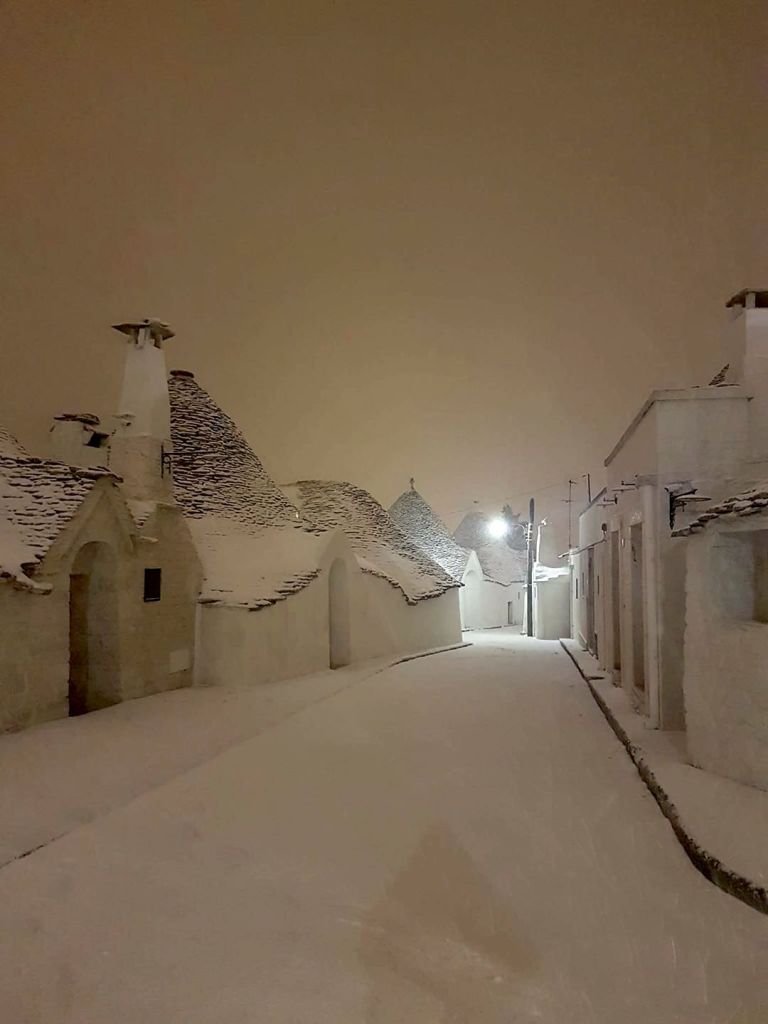
The Wolves
(Contessa, Alpine Italy, early 1950s)
It was on the eve of my eleventh birthday
that I saw them.
The winds had howled all through the day,
bringing from the mountains the flurry and blast of snow
which settled thickly in the village street.
About midnight I awoke, and taking a pitcher,
cast a blanket about me, descended the creaking stairs
and hurried up the street to the fountain at the plaza.
The whole world outside was under snow’s gentle, eerie spell.
In the shadows where I walked, it lay a luminous blue;
behind, where hung a solitary lamp,
it spread in a placid pool of brilliant white.
The night air cut cold into my cheek; with every step
there came a crunch and squeak beneath, and with my water now
I pressed the blanket to my face and hurried home.
Upstairs again I flung the shutters wide so I could gaze
upon that airy miracle that only snow creates.
And then I saw them! Suddenly, around the corner
where the lamp cast its otherworldly glow.
A pack of six or seven, loping up the Via Verdi,
and the light of the lamp drawing silver from their coats.
Then black spirit shapes in the blue of the shadows,
trotting with a sure confidence that proclaimed
distain for man and for his works.
I held my breath as immediately below
they halted at my footmarks, milling round, their snouts
pressed to the snow. But in moments they were gone again,
with a sureness of advance which spoke of some mission
they pursued, some errand of the darkness known only to their kind.
They crossed the plaza – where only minutes previously
I had drawn my water – and were gone again into the night.
Now all was still and empty again, and it would have seemed
like a dream to me, if it were not for their tracks
mingling there with mine. It was both wonderful and terrifying –
the silent, assured stealth with which they passed.
From ‘Journeys in Time’
 © 2024 Dafydd Hughes Lewis. All rights reserved.