
The Shore in November
Bring me
a day
of grey cloud
and rain
that wakes me
and takes me
over washed stones
and fern
and farm,
silver-tinkled
holy streams,
congregations
of leaves laid low,
tumbled walls and
bramble heads
all heavy hung
with dew,
to the cliff-bound shore
wind-hewn
and strewn
with gull and diver
multitudes;
and the hiss
and the boom
of spume in the air,
and the headland
a ghost
away northward
somewhere.
Beyond
Beyond this moonless shore are flung a thousand leagues
of silent sea,
where shifts the restless ocean’s face in hill and vale
and rolling lea.
And ancient farers plied those waves – and costly cargoes
I have seen,
of amber, furs, and ivory… but in some
far, forgotten dream.
Above the darkened land is hung a million miles
of velvet sky,
where drifts the heavens’ gleaming dust, and titan suns
are born, and die.
And starry symphonies I’ve heard, and astral strings
all played upon
the winds which wend those spangled gulfs… but as some
faint, forgotten song.
Beyond the fields I know there run ten thousand miles
unknown to me,
where lift the mighty mountain chains, beyond the plains
of Tartary.
And there I saw a dusky queen, and in her eyes
divined this price –
we’d live and love through all the years… but in some
fled, forgotten life.
A wild, misty shore such as the one in The Shore in November might be placed anywhere in the Celtic West, from Brittany to the Outer Hebrides, and if any of these fit within the scopes of our experience, so much the better. For me, the location can be no other than one of the windswept strands close to my old clifftop home within a mile or so of the most westerly point in mainland Wales. From there (that hallowed outpost of early Celtic Christianity where the very slabs of the cliff face are an episcopal purple), gazing west-south-west over the Celtic Sea and past the unseen coast of Ireland, the wide, shifting plain of the Atlantic lay – and no other landfall for countless leagues until the great continental mass of North America. There, on those dark end-of-year days when the Atlantic winds began to mount their assaults, bringing with them their rain, and all the coastal vista became a mysterious, mantled grey, the spirit of Nature at her rawest and the long-gone centuries’ legacy of ancient stone were keenly felt.
Set upon the very same shore, but this time on a dark, moonless night, Beyond allows the imagination to wander into three perspectives – the gazing outward to sea, the gazing upward at the night sky, and the looking backward to the dark body of the land.
And what shipping has passed this western shore! Nowadays great tankers out of Milford Haven, and container ships from ports all over the globe can be seen crawling across the horizon. But there is no romance in that, and to find something of the sort we would have to go back a little in time, to the early 20th century, at least, and more so the 19th, when passenger vessels out of Liverpool crowded with emigrants, so many of whom were our ancestors, passed by, making their way into the Atlantic and onward to America with its hopes and dreams. And with the 19th century we are firmly back into the age of sail, when Welsh ports large and small were forests of masts and rigging, those of ocean-going vessels and the multitude of coastal traders which plied their way between north and south, and beyond. Such sails to imagine, passing out there. And staggering and thrilling to think, standing today on that shore looking out to sea – and it is the same shore, and the same sea – that out there it was, in that distance and on that horizon which we now observe, those sails had passed, century upon century ago, and that they were seen through eyes, olden, long-gone eyes other than our own. And I am bound to let the more recent past, fascinating as it is, give way to those remoter times.
I would look out on those islands known today by such un-Welsh names – Ramsey, Skomer, Grassholm – these were the three always within sight. Those Norse-given names – Rhagfn’s Ey (Raven’s Island); Skalm Ey (Cloven Island); and further out and lonelier than these two, the bare, rocky ‘holm’ (islet) which has nary a scrap of grass but which is home, nevertheless, to thousands of fishermen; its great colony of northern gannets (the Grassholm, too, which is the ‘Gwales’ of Branwen, where Bendigeidfrân’s seven loyal companions sojourned, but in Faerie’s non-mortal, dreamland time, for all of four-score years). And I would imagine the sleek craft of the Dublin Norse stealing across the great curve of St.Bride’s Bay, or perhaps others from further afield in the Hebrides, the ‘Southern Isles’ of their Sagas, passing by and on their way to harry our own southern coasts. Why, those Norsemen even gave a name to the little skerry, the meagre rock outside small Solva’s picturesque inlet – ‘Graensker’, known to this day as ‘Greenscar’. (And should you ever happen to be looking at a map of the Eastern Roman Province of Pannonia, you will find, there, a garrison town on the Danube Frontier named – yes, you have it – Solva. Both Pannonia and adjacent Moesia had very substantial, embedded Celtic populations, too, so … but no, not a chance of a connection! – Fun Fact only! English ‘Solva’ < Welsh ‘Solfach’, of course. Is Solva [Wales] twinned these days, I wonder? (Solva [Pannonia] might be in Hungary now, I think, and be known under a modern alias). It’s puzzling, to me, how (and why) these places have retained Norse names. Take Swansea (‘Sven’s Ey’); why on earth should this name for the town have persisted? The Pembrokeshire islands, too – the Norse were transients, in Wales, and as far as I know there is no real evidence of their settlement, unlike their Kingdom in Dublin, for instance, or their settlements in the Scottish islands. Why should the local Pembrokeshire Welsh populations continue, or even begin, to call these places by their Viking names? And to wander off a little again, talking of such hijackings, doubtlessly the great goddess Brigid (the ’Bride’ of the Bay) and great indeed she was in Irish mythology, was corralled into sainthood by Pope Gregory’s dictum that pagan beliefs too deeply-rooted to be removed were to be clad in Christian trappings, and heathens thus weaned away from their old beliefs.
Rome policed the ‘western approaches’, and ancient eyes would have spied from any one of our shores Imperial vessels plying their way between north and south – between the naval base of Segontium ( > Caer Segeint > Caersaint) in Arfon and the southern one in Cardiff. At Lydney, on the west bank of the Severn (lost now to the English county of Gloucestershire) was a Fleet Supply Depot, and there were signal stations along various stretches of our coasts; all was taken care of. And 300 years even before the beginning of the almost 400-year Roman presence, watchers might have spied the ship (or ships) of the Greek navigator and explorer Pytheas of Massalia (modern Marseilles) tread our home waters.. Pytheas and what he is said to have accomplished has always fascinated me; I have imagined his pilot taking note of the long outthrust of Penmaen Dewi (St.David’s Head) and the prominent height of nearby Carn Llidi as landmarks for their lost, but much remarked-on periplus.
I stood far out on the Head, once, and called out to him:
‘Ahoy, Captain! Whither bound?’
“See where the red-gold riband runs
aloft there when the western sun
doth sink afar when day is done
behind it?
Look where horizon’s silver race
crosses the shifting ocean’s face –
Is there some other, unsung place
beyond it?
List when the west wind tells its tale
of spectral clouds and landforms pale.
Hark to this bygone captain’s tale
about it…”
Then the wind took his voice, and I could hear him no more.
Pytheas had left his populous pond which had long-time doubled as Emporium and Theatre of War and sailed beyond the Fretum Gaditanum, the Strait of Gibraltar, past the still somewhat enigmatic tin and lead-bearing places/islands said to be north-west of the Iberian peninsula already known to the Phoenicians/Carthaginians – and into the Irish Sea, continuing northward, from what can be retrieved from descriptions in his lost work, even into the Arctic regions and then southward, it seems, along Scandinavia., the Baltic, and Germania. Stories of the existence of a great frozen waste, ‘Hyperborea’, had over several centuries sifted through to the comfortable confines of the Mediterranean, but bravo, Pytheas, who left the warm climes and great cities and actually went there! What a voyage, and what a feat that was! This was during the Greek Classical era, and was fortunately documented. But long, long before Pytheas, who else? What mariners and what manner of craft of the unknowns of the Bronze, the Neolithic? And no-one to tell of the tale! But out there in the bay, and within sight of clifftop watchers, for thousands of years, they were to be seen. That is certain. And this western sea-route had its genesis in a very remote past, and far, far away from our northern lands.
That conditions for settled communities (cereal-grain and livestock farming) were present and were developed in what we now call ‘The Middle East’, the regions of the historical Mesopotamia and The Levant, is well-known to all. The great irony of this remarkable shift in life-style from wandering hunter-gatherers to sedentary communities is that the very condition of staying in one place would, with time and natural population growth, mean that future elements of that settled society would necessarily have to leave it and strike out on their own; in other words, start ‘footing it’ again – they would have to move out, those sons and daughters, on their own, to seek (or rather to create) pastures new. Travel they had to, and travel they did, and their getting up and going set in motion what was to be one of the greatest migrations in human history. Following an initial thrust into the coastal parts of eastern Anatolia circa 7,800 BC, to refresh our memories, their westward progress is very firmly evidenced in the Aegean, the extensive littoral of which would enable them to diversify into cereal-grain farming on the adjacent mainland, sheep-rearing on the islands, whilst also practicing the other major aspect of their coast-based economy, fishing. A pattern which was to prevail for a long, long time, as residents of our own coasts and islands can to this day testify. From there they continued to the Adriatic, then along the whole of the northern coast of the western Mediterranean to the Andalusian region of the Iberian peninsula and on to the Atlantic facade, entering our own waters c.4,100 BC. They had opened up the ‘Great Western Sea Route’.
Imagine what would occur over such a thousands of miles, thousands of years trek! They would meet up with others along the way – the foragers who had preceded them; other Afro-Asians and Indo-Europeans, too, who composed the other (North African and inland European) thrusts of this Neolithic spread. Interactions, resulting from these – adaptions, adoptions, contributions, replacements; exchanges of artifacts, technology, religious ideas; intermarriage, displacement of peoples, linguistic accretions and losses; changes in genetic patterns and in skin-pigmentation from the absorption of light in the higher latitudes… all this. And all the while others, over those same thousands of years, would follow the first pioneers, losing sight of them, settling, building, until the Bronze Age train and then the bearers of Iron came, and overtook, and established their newer ways, and the coastal trading cities sprung up in the long wake. Yes, it is the sails of all of these that would be seen in our Irish Sea.
It was a seaway that would remain open for millennia. During the period of Roman domination, it was allowed to remain open as a mercantile route to their ‘Mare Nostrum’; after their departure it continued the Mediterranean trade, and acted as a busy, resurgent highway during the ‘Age of Saints’. During the Mediaeval period it saw much use of troop transport, as armies were ferried to and fro between France, Wales, and Ireland. And so on, and so on, into the Great Age of Sail… Then, in our own time, there were the Welsh skippers who ran Franco’s blockade during the Spanish Civil War, operating from such ports as Cardiff, Newport, Swansea in southern Wales, and St.Jean de Luz in south-west France, delivering fuel, medicines, guns and ammunition to the Republicans in Bilbao and Santander. The most well-known of these was Captain ‘Potato’ Jones of Swansea, with his real cargo deep beneath the tatws of his tramp-steamer, Marie Llewellyn. There was Captain Lewis James Herbert of Borth, and Captain Dan Nicholas of Tresare, north Pembrokeshire, great-nephew of Jemima. A Captain William Roberts of Penarth, too, was among that band. Between them they rescued, sometimes during bombing raids, an estimated 25,000 refugees on their return trips. And a good number of us will remember – how could we forget! – Sioni Wynwns out of cousin Brittany shouldering his yoke of stringed onions, going his rounds and conversing with one and all in good Welsh. I remember Breton trawlers anchoring for the night off the north Pembrokeshire coast. Those were the seafarers, and that was our seaway.
And what can we say about the night sky? Nothing. For it is there to astonish, to astound us, and make us ponder on what we are. How many times have we gazed in wonder at the great, shining constellations poised over all creation – at the Plough, at Cassiopeia, at the Pleiades; at the great Irish constellation, O’Ryan … but come – let us be Sirius!
Then all the hidden land stretching away from us, as did the sea. The opening lines of the first stanza – ‘Beyond the fields I know’ – begin with words which echo a concept familiar to anyone who has read Dunsany – e.g., ‘Go from here eastwards and pass the fields we know, till you see the lands that pertain clearly to faery; and cross their boundary, which is made of twilight, and come to that palace which is only told of in song’. We could be back, with these words, among the enchanted seven who sojourned in otherworldly Grassholm’s ‘fair royal palace overlooking the sea’… And the closing lines of this stanza give an intimation of that lady who first appeared by candlelight in Ceridwen’s Candle / Manifestations of the Muse in a previous post; she appears in various guises in a number of these poems (as the Naiad in Lays of the Armoured Isle [3]; as the Lady Nemõné in The Wakened Rose / Lays of the Armoured Isle [1], and will make herself known in others to come. She may, as this time, be seen as one among a circle of shadowed faces in the dark interior of a nomad yurt. But it is not necessary, as in the stanza, to visit the vast spaces beyond the Zungarian Gates; for she may also be found on a mountainside in Wales
where the path curves out of sight,
in the chaos of the stones,
in the shadows of the blackthorn and the ash.
She has oak leaves at her brow;
and whitethorn trailing low
in profusion from her waist down to her knee.
Her eyes are dark as hazel haws, her form,
of witching grace; her limbs are apple russet brown.
Flown time is in her face.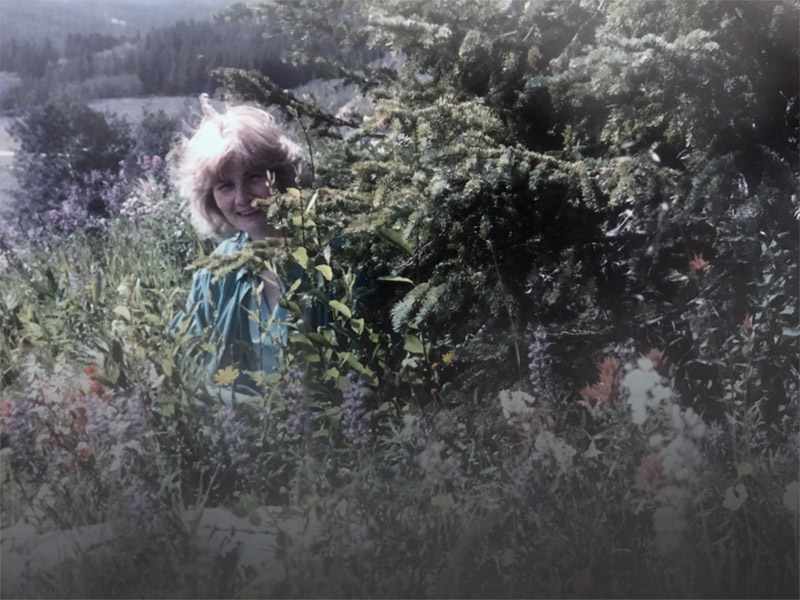
She may appear as a Dark Queen, a mountain sprite, or in a candle’s light; as a woodland or water nymph, or as a fleeting face in the marketplace. Or on the wind-swept shore of the beginning, a lone, scarcely-distinguishable figure in the distant haze of sea mist and salt spray. She will be walking away from you, and like Rhiannon, the gap between you and her will always remain the same. She will never allow you to gain her side.
‘The Shore in November’ is from ‘Welsh Past and Present’
‘Beyond’ is from ‘Journeys in Time’
‘Pytheas’ Reply’ is a slightly altered version of the first three stanzas of ‘The Lay of Torcebrand’, from ‘Lays of the Armoured Isle’ in ‘The Lost Manuscripts’
The Dunsany quotation is from ‘The King of Elfland’s Daughter’
‘The Oread’s Song’ is (minus its first line) from ‘Spirit on the Mountain’, the omitted line being ‘I think there is a spirit on the mountain’
Carnage and Aftermath
(With guest poets Brendan Mac Congail and Jenni Wyn Hyatt (Williams)
The Angels of Mons
(Flanders, August 23-24, 1914)
And those who awoke upon that field and knew that they were broke
and close to death
perceived that an evil angel stood astride them, to inform them,
from a gore-stained scroll,
that they had fought and bled and died for naught;
that they were but victims of ambitious and deluded men
whose certitude that they themselves and no man else was right
was so deep-graven in obsessive minds
that their word became for all the land a fixed law and an oracle;
that to such errant ends, and for such blinkered men
their good life’s blood was spilled unjustly and as sacrifice.
And there upon the bloodied field those souls had left
there lay a single huge black feather,
fallen from the clouds up-piled above the carnage
from the great dark clapping wings of Lucifer.
Dafydd Hughes Lewis
History
“Reality is in the eye of the beholder,”
Said the fallen soldier.
“For what I have seen, the base and obscene,
Is changed in the story to man’s greatest glory.
With the passing of time the blood and the slime
Do wither and pale, until the real tale,
of mud and of dirt, of fear and of hurt,
Is distorted,
Arranged,
Forgotten,
And changed;
Till evil and hate are holy and great,
When told around fires by cowards and liars.”
Brendan Mac Congail
Last Post at the Menin Gate
I stand again within the Menin Gate
and through the arch I watch the scudding clouds
flushed by the evening sun. The clock’s slow hands
drag round to eight. The waiting crowd is hushed
as out the buglers march. The poignant notes
of the Last Post pierce the air like arrows
then quiver and die. Laurence Binyon’s words
ring out. “We will remember them,” we all repeat.
The traffic rumbles on out in the street;
within the Gate the silence is complete.
Now groups with solemn faces lay their wreaths.
The bugles sound again; a piper plays
his sad lament; the ceremony ends.
The silent watchers slowly come to life
and start again to read the many names
upon the panels. Relatives are found
and private homage paid. Even as we stand
I know that brave young soldiers perish still.
‘The war to end all wars,” yours was to be
but nothing’s changed; the world’s still full of hate
and, as we saunter to the square to eat,
the Stalker Hopelessness snaps at my heels.
Jenni Wyn Hyatt (Williams)
Battlefield 1918
Here they fought.
On this ground they bled and died –
this meadow, where the poppies thrive.
Dafydd Hughes Lewis
Notes on the poems and poets:
The Angels of Mons
This was the second Battle of Mons; an earlier one took place in 1678 as an episode in the Dutch War of Louis XIV, when Mons was part of the Spanish Netherlands. The WWI battle was the first engagement of that monstrous and terrible conflict in which British and German offensives clashed head-on, according to the grand tactic governing the ‘Great War’ – the simultaneous massing of forces on a vast front and on a scale never before employed. It resulted in an initially heavy defeat for the outnumbered British-French force. The poem’s title is taken from a myth which arose that told of ‘angels’ – shining entities sometimes described as phantom bowmen, which were seen on the battlefield. The story is one which mistakenly grew around a short story, ‘The Bowmen’, by Gwentian Welsh writer Arthur Machen, published in the Evening News immediately following the battle. The myth took hold of the popular imagination, becoming widespread and elaborated to the extent that there were descriptions of German soldiers found dead on the battlefield with arrow wounds. The poem is excerpted in a slightly condensed form from my The Apocalypse of Gweir, and has appeared previously in The Igam-Ogam Mabinogion.
History
As in The Angels of Mons above, History tells a tale, and vividly and bitterly, of the deceits which seem everlastingly destined to accompany war – deceits engineered and protracted by the powerful, to be so often credulously accepted by a populace caught up in its hysteria.
Last Post at the Menin Gate
The Menin Gate, in Ypres / Ieper, Belgium, is a memorial to commemorate the 54,000 men of the ‘United Kingdom’ and Commonwealth forces who died in the Ypres Salient before August 16, 1917, and who have no known grave. The Last Post ceremony is held there every evening a 8 o’clock. This poignantly-related poem is a distant aftermath of solemn remembrance – our quiet and respectful tribute to what was suffered and borne by those who, in the spring of their lives, were dragooned as sacrificial thousands from their honest labours in our villages and towns, our mines and farms – and from their families left broken and in mourning. That is the aftermath to which our thoughts are surely pledged, and one which is impossible to forget. It is not for the rival royal houses of Europe, nor for their complaisant ministers, nor for their subservient generals, nor for those who would make coin out of misery.
Battlefield 1918
This Haikuesque tercet is offered in quiet conclusion, and speaks for itself, I hope.
Brendan Mac Congail is an Irish archaeologist long resident in Bulgaria; he is the author of many academic articles on the Celts of Eastern Europe and the man behind the superb online site BalkanCelts which, if new to the reader, is highly recommended. In his articles Brendan deals with the Eastern Celts from the presence of Celtic confederacies in the 4th century BC – indeed, from their seven month siege of Rome in 390 BC for which, in the true Roman spirit of animosity, they were never forgiven – in much of south-central Europe (the Danube basin, Poland, Hungary, the Ukraine, Romania) to their great invasions of and establishment in the post-Alexandrian Balkan territories, and eventually in their easternmost extension of Galatia in Anatolia. For all of 150 years, too, the Scordisci Confederation was to hold Roman occupation of the Balkans at bay. For the countless students at our Universities held in thrall by their lecturers’ preoccupation with the Britanni and the Gauls, then, it might be to their advantage to read more of Polybius than Tacitus. In closing the note, I don’t think many realize that archeologist Brendan writes poetry on occasion; he does so, and in a striking style.
Jenni Wyn Hyatt (Williams) was raised in Maesteg in the Llynfi Valley, West Glamorgan, Wales. She has visited the WWI cemeteries in France and Belgium on many occasions. Widely published in literary magazines, she also has two volumes of verse to her name – Perhaps One Day (Rowanvale Books, 2017), and Striped Scarves and Coal Dust (R. Haigh & Sons Publications, 2019) both finely illustrated by Cathy Knight. Both books are available direct from the publisher or from Amazon. Her subjects and her styles are wide – and like all good poets, Jenni composes humorous as well as serious pieces. Striped Scarves and Coal Dust includes a section, ‘Cerddi Dau Dafod’/‘Poems in Two Tongues’, her compositions in Welsh with opposite-facing translations into English.
From ‘Journeys in Time’
Dialogues without Words (2)
Josephine
Just once I saw her, Josephine,
one face among the crowd, my eyes,
unwarned, were drawn to her in all
that loud mélange. A gathering
I’d chanced upon whilst visiting
a friend, a… person I had come to know;
a family reunion of some kind. But they barked
non-stop, they argued. A real smugglers’ den.
I had not much in common with
that hurly-burly clan.
A certain beauty
clung to her as it does to some, I know,
though years go by and leave their mark.
Her hair, still full, waltzed round her neck
with every dancing move, and I wondered at such
full and flowing locks which imped around
– I now could see – an amply tricked-out face…
Yes, beauty clings
to some, I know. But then, through what? Some noble
grace of being, consort of the first fine flowering,
outwardly and inwardly possessed, that echoes on
in such a soul? I like to think that’s so.
But Josie – no.
With Josie it had gone another way; what now remained
unfashioned by an inner grace or quietude of being.
She glanced at me, the stranger guest, and not just
once or twice, her heavily black-bordered eyes
in a struggle to look bright. And then, those
passive lips; coquettishness still angling from within
an all too sensuous self; within – it saddened me – the wreck
where splendid beauty once had been. A haggard beauty, now,
was Josephine.
I made excuses,
left the crowd as soon as courtesy would brook.
And as I stood back from the door became recipient
of one final, questing look.
Note: Modelled on an incident mentioned in the correspondence of General Sir Charles William Geoffrey Estcourt, C.B., in a letter to his sister Harriet dated February 12th, 1789. The encounter with ‘Josephine’ took place earlier during that year at St. Philippe-des-Baines, Cote d’Azur, Mediterranean coast of France, where the General was recuperating after service in British India. [From the narrative of Stephen Vincent Benét].
From ‘Of Goddesses and Women’
The Bound God
A sleeping god awoke
as though he was the first to wake in all time.
Around him cold, and dark, and silence,
nor could he move a limb, for he was bound.
‘Ah’, remembered he, ‘I am the god whose destiny
is the darkness and the silence and the cold.
I am that Bound God’.
And because he had awoken in this place time upon time
and for aeons slept again,
did he in a while begin his journey into sleep once more.
But now, as in a dream, Light came unto him…
Softly she came, peering through the canopy surrounding him.
to look upon the bound and sleeping god.
But he, stirring from the beginnings of his sleep, did speak:
‘Never did I cast mine eyes upon aught but darkness –
yet thee I know. Thou art Light’.
‘Yea’, came her whisper, ‘I looked on thee in thy dark resting place,
and took pity upon thee, thou Bound and Sleeping One’.
The touch of wind on harp strings had her voice,
and again the Bound God marvelled:
‘Never did I know aught but the silence of eternity –
yet thee I know. Thou art Voice’.
‘Yea, and I perceive that I am music unto thee,
thou who lie there bound’.
‘Then wilt thou not enter, thou of Light and Voice,
and loose these bonds that bind me?’
‘Nay, for my movement in thy stillness and my brightness in thy darkness and
my warmth to ban thy coldness would of certainty beguile thee.
Above which he who is my Master forbiddeth even this prying of mine’.
‘Thy radiance and thy voice beguileth me already. But who is this
that forbiddeth thee? Is it he that doth keep me bound?’
‘Fret thou not upon such matters; but since. meseemeth,
thou art as prying as I, ‘tis in truth my Master who hath bound thee.
My Master, and thine, for it is he who is our Maker, and thou art bound
for that thou art yet undestined. But he keeps thee thus o’erlong –
though time is naught to him who shapeth stars and gods –
and betimes have I come to gaze upon thy sleeping self.
I thought not to enchant thee. But since, as thou sayest, thou art beguiled,
and I beguiled as thee… yea, I will come to thee’.
And when she came to him, he beheld the fullness and the brilliance
and the great beauty of her;
and when she touched him, his whole being was enveloped in her warmth.
When the fetters were undone he clasped her to him, and willingly she came.
How long it was they slept they knew not, but that when they awoke
the dark pavilion which had enclosed them shone now with the brilliance
of the stars,
and a voice came, drifting down upon them from above.
‘So. There thou art, my wayward goddess – and thou hast found my
Bounden God’.
And she in the Bound God’s arms did struggle to be free of them, calling
‘Forgive me, Lord! I sought only to give succour to one bound
in darkness,
who could move no limb, nor hear kind words, and who knew neither
warmth nor light’.
‘And I had fashioned thee both so differently. Forgive thee, sayest thou?
Yea, that is done, for knowest thou that I ever intended him for thee, and
thou for him.
But punishment thou shalt not escape, goddess mine, for thou metest out
as much upon thyself’.
‘How so? How meanest thou, my Lord?’
‘Feeleth thou not thy light diminishing? It floweth into him that wast
made dark – as soon thou wilt be.
And feeleth thou not how his strong arms do fetter thee? Thou art the
Bound One now!’
And when it came upon the goddess that this was so, she cried out for
her Master’s help.
‘Nay, I will not help reverse what a goddess did choose to do of her own
free will.
A craftsman only am I, and not a delver into what is to be counted right
or wrong.
This Wheel that I cast across the dark canopy above must ever spin upon
its own volition. I steer it not.
But take thou heart, thou kind, unruly goddess, and thee, thou clasping,
disconsolate god.
For since thou hast of choice been bound together, a prophecy will I make,
that thou shalt thus remain.
Thou, o light and unfettered god, shalt encircle and embrace this thy
chosen one for time without end.
And thou, o goddess embraced, will bring forth from thy loved one
great bounty,
and innumerable will thy children be, to cherish thee until the end of time’.
By now was the unbound god a-shine with light, and the goddess sombre;
and she knew herself to be with child.
‘Lord, we thank thee for thy blessing. And must we stand forsaken, now?‘
‘Nay, for he that hath crafted thee may not entirely forsake thee.
Knowest thou that though thou embraceth thy loved one always, o airy-light
god, when thou and she doth sleep
I with my glistening, myriad stars will watch over thee both. And brighter lamps
will I give to thee;
to keep thee in mind of my presence, a kinsman and a kinswoman for thee,
a brother to burn fierce in thy wakefulness, a sister to glow gently in thy sleep.
Brother Sun and Sister Moon will they be named, and thou, beautiful goddess,
the Mother Earth – and thou, god of the broad embrace, her girdle of the Sky.
Signed holy shalt thy family be and blessed by thy progeny.
But mark that thou shalt be my last works, and that I did make thee of
mine own life-stuff,
that which wast from the beginning scattered unto powder among my stars.
In them, and in thee, will I henceforth abide forever’.
(The metrical Creation Myth from ‘The Cosmology of the Armoured Isle’)
Note: ‘Brother Sun and Sister Moon’ is a phrase which, on first coming across it, immediately appealed to me. Some time later, I found that these were the words of St. Francis of Assisi, but it was not until a good few decades later (there is so much to learn and so much that must be missed!) that I came across his Laudes Creaturarum / Canticle of the Creatures / Canticle of the Sun. Upon reading it, I found that there were striking parallels between The Cosmology of the Armoured Isle (into which I had promptly adopted the two named siblings) and St. Francis’ Prayer, as the Creation Myth contained in the Cosmology, too, features a single family. Building upon brother and sister planetary entities, though, I suppose that such similarities were inevitable. The poem is part of a class of ‘Fragments’ incorporated into the body of the manuscript which contains the narrative of The Armoured Isle. Of the little of the Cosmology that remains, apart from this principal and apparently complete poem of Earth, Sky, Sun, Moon and stars, there looms large in this cosmic family the sometimes sinister figure of ‘The Grey Brother’ who has many attributes and aspects – he is the Wind as Zephyr and as Storm on land and sea, and ultimately is responsible for the demise of all living things (I have notes for all its members tucked away somewhere, but they must lie under one of many dust-covered piles and are probably pressed into geological strata by now). But there are, in addition, all the minor spirits responsible for Earth’s flora and fauna, and every aspect of the natural world.
There is a secondary connection. The reversal of identities between light and darkness – the identities in the case of the tale being Sky and Earth – bears a parallel to a number of existing myths of exactly such an exchange between solar and lunar deities, in which a female Sun Goddess’ position is usurped by a male entity. Although the Sun God and the Sky Father are one and the same in European mythology ‘Sun’ is replaced here by ‘Sky’ as an entity entirely separate from the Sun itself (Sun / Sky being throughout the Cosmology non-interchangeable terms). The conception is rather of the sky immediately above and encircling the Earth – comprising our biosphere / atmosphere and being, effectively, the ‘tent’ or ‘canopy’ of the sky exclusive of the ‘firmament’ of the outer heavens. The already created but aimless Sky Goddess, sensing within herself a lack of purpose, is naturally curious – and as it turns out over-curious, but happily so – to know what exactly lay within that which she had been appointed to watch over for so very long. The coming together seeds the Earth with all its future teeming life-forms – ‘Innumerable will thy children be, to cherish thee until the end of time’; well, until this our own time, anyway, when the bounty of nature has been blighted by its own custodians.
A third connection is that the ‘Bound God’ can be equated with ‘The Prisoner Gweir’ of Taliesin’s Preiddieu Annwn / Spoils of the Underworld. This is a well-known poem, not all that long, but with a whole lot packed into it. There have been a number of interpretations of it – and it is a poem which deserves interpretation as well as translation. My personal homage has always been drawn to the exposition of Alun Llewellyn. I came across what he has to say only in a piece of correspondence (but fairly detailed correspondence) in a late- ‘60s literary journal, and have been meaning to follow it up ever since; the possibility of further elucidation in a future article was suggested, but despite the fact that I was intrigued by it, foolishly never followed it up (something that I am only now – with a jab in the ribs from The Bound God – very much belatedly investigating in the hope of tracking down the proposed second article). I wonder, too, whether a monograph ever saw the light of day. Alun Llewellyn’s thesis, to me both appealing and persuasive, is that the poem is nothing less than a skillfully constructed cosmological treatise in verse; its knowledge is profound and steeped firmly in Classical philosophy. ‘Gweir’ is used as a synonym for the Earth, and the spatial region of ‘Carchar’ which surrounds him is a closed circuit within which he is imprisoned. It occurred to me that this favourably suited the situation of The Bound God and his watcher.
Excerpts from my long poem, The Apocalypse of Gwair (‘Gweir’ is actually the more accurate spelling) have already been posted up as stand-alone poems (see The Angels of Mons and The Encounter with Time and his Brother in the list of titles).
And the News Today is…
Upon Reading an Item in a Newspaper
I would sew you in a sack,
rat-bastard, together with an ape,
a mad cat, and a snake,
or bind you in a web
with the spider still inside
and stand you in the blackest crypt
to listen to the anguished cries
of those who have committed
crimes like yours and are consigned forever
to the same perdition,
damn your eyes
Note: Written in anger and disgust. Every once in a while, we read news items which fill us with horror and revulsion, a sickness inside that human beings can be capable of acts so monstrously evil. They might play on our minds for long afterward; we may perhaps never become immured to them.
It was Cicero who wrote of the poena cullei, the ‘punishment of the sack’, reserved for parricides, where the perpetrators were sewn into a leather sack with four living creatures – a dog ‘the most slavish and contemptuous of beasts’ [?!]; a cockerel (with beak and claws especially sharpened); a snake (the male principle); and a monkey ‘the gods’ cruelest parody of mankind’. The sack was then thrown into the Tiber. The practice was revived in Germany in the Middle Ages and persisted until the first part of the 18th century. Abraham Cowley, Essay on Solitude (1668) lists only three animals (an ape, a dog, and a snake), and it is from him that I take my slightly adjusted list, substituting a cat for a dog, with profound apologies to all cat lovers. The reference to the web and the crypt I have taken from the threats of Scarbo the Dwarf in the 3rd Part of Aloysius (Alo-wish-us) Bertrand (1807-1841) Gaspard de la Nuit. ‘Gaspard’ is considered the first prose-poem (I’ve just searched the shelves for my copy, and can’t find it; but a good few sections of it were also beautifully translated by the celebrated Spanish-American writer Angel Flores). Baudelaire stated that ‘Gaspard’ influenced his conception of his Les Fleurs du Mal.
Damnably Correct
It’s the twenty-first damn century,
and all light-hearted comments
uttered publicly will be interpreted
not as humour or as irony, but
deadly seriously. Should you err
by one degree, then you’ll be hounded
by a righteous crowd and by
a media scrambling for publicity.
So get ready to ‘repent’; for God’s sake
say you ‘acted foolishly’, and be prepared
to quit your post immediately.
Depart – and with the maximum humility.
Note: On a much lesser particular than is dealt with in the first poem, I suppose we’ve all become familiar with this tiresome witch-hunting phenomenon of recent years. Surprising is how University, etc., authorities don’t place all their support behind their accused faculty/staff rather than yielding so submissively to outraged fancies.
From ‘A Medley of Verse for us Riders of the Earth’
Dialogues without Words (1)
The Bridge Not Crossed
I saw you come across the bridge, and watched
the way you walked, and how your gracile figure matched
the gliding stream below. I saw your eyes;
they met with mine from all across the way, and I wondered
as I watched you, unattended, quite alone, if someone,
somewhere, waited, and claimed you as his own.
Or if… if you were unattached… would you pause with me
and smile, and – talk? With me, approaching on the bridge?
I think you looked at me once more. Yes, nearer now,
you did, I’m sure.
We drew abreast. You gave, like me, a shy
and scouting glance, but preordained, and edged, I saw,
with that ill-starred, fated nonchalance, that doom laid
in an ancient past on such as you and I. We looked away,
uncertain hearts, and passed each other by.
Note: Modelled on a poem, ‘Of a maiden walking alone on the great bridge of Kawachi’, in the Manyõshu (the Collection of a Myriad Leaves), the oldest extant collection of classical Japanese poetry. The poem forms part of the ‘Mushimaro Collection’ and is likely – but not conclusively ascertained although the collection bears his name – to be the work of Takahashi Mushimaro, an important poet of the Nara period (latter half of the 8th century AD). In Wales it was the age of the Cynfeirdd, in Anglo-Saxon England the age of the Beowulf poem, and a predominant eulogistic / heroic tradition which is in contrast to the sensitivity of much of the Manyõshu and the contemporary poetry that was flourishing in China’s T’ang Dynasty’s ‘Golden Age’ of literature. For another poem modelled on an item in the Manyõshu, see ‘The Colour of Time’ in the listed poems.
Jac the Lad Practises Pro Bono Ophthalmology
They look straight through me,
as though I am not there –
they look straight through me
with a robot stare.
Madam doesn’t want to know.
(I only want to say hello!)
They flutter insecurely
and quickly try to hide –
they flutter insecurely …
gorilla at her side;
no telling if she’s friend or foe.
(I only want to say hello!)
They shine demurely
before they look away –
they shine demurely,
but don’t know what to say.
Maybe yes, or maybe no.
(I only want to say hello!)
They fix upon mine surely
attended by a smile –
they fix upon mine surely
without a trace of guile;
friendly, open. Way to go!
(I only want to say – ho–hoh…!)
Note: Although this is an imaginary episode, ‘Jac the Lad’ is a real person who I once met (see ‘Adversity, Phantaseuphoria and Jac the Lad’ in the listed poems). The frivolity of Jac’s overt questing – something which is, knowing Jac, hardly intended as a prelude to breaking anyone’s heart – stands in calculated contrast to the shy genuineness of feeling expressed in the preceding ‘A Bridge not Crossed’. But to return to a sense of sobriety:
Fleeting Thoughts across Tung-Yang Stream
(From the Chinese of Hsieh Ling-yun, 385-433AD)
Nice … but some man’s wife, I think,
bathing those white feet there in the stream.
Like the lovely moon – lost now in clouds –
and for me, ah, out of reach!
Nice… but surely some girl’s husband,
sailing that white skiff along the stream.
Dare I ask him what he has in mind?
Oh! Now clouds have washed across the moon!
From ‘Mysteries: Poetic Reflections on Womankind and Love’ / ‘Beneath the Silver River: Translations of Classical Chinese Poetry’
Canticle
And Jesus wept.
But John baptized,
while Simon Magus
mesmerized.
(And, oh! What eyes
that Helen kept like doves
among her locks,
and honeyed lips of scarlet thread,
such roses budding
on her breasts!)
Invoking canticles of dread –
and clever men, in time,
in time, would put her
to the test.
And sultry eyes had Magdalen
who stood beneath the cross.
(And, oh! What tears
that Mary shed
to find her loved one lost
and dead, who sought her
in the market-place,
and on her face laid trembling hand!)
But whorish and immoral eyes,
said learned men in holy guise,
in time, in time.
And in that desert
they would beat a road
that led unto God’s feet –
while the cock crowed, and Death
mowed with his scythe,
and flowers grew. And the world
pursued its ways.
Ten thousand souls
were crucified: the old earth spun
its weary course
about the sun.
Note: Simon Magus, famous for his confrontation with the apostle Peter in Acts viii, 9–24 and vilified as a charlatan by the later Church Fathers, is said to have been accompanied by a beautiful Tyrian woman, Helen. She was described by church heresiologists – as was Mary Magdalen – as a prostitute (a favourite label and defence mechanism of early orthodox Christian writers). The imagery relating to her I have taken from the description of the Shulamite Maid in the Shir haShirim (Song of Songs / Canticle of Canticles / Song of Solomon’). It is interesting, too, that the ‘Song’ is, in the Gospel of John, apparently used in reference to Mary Magdalen.The last eleven lines of the poem are by way of a universal sketch of the setting for subsequent developments. In the lines ‘And in that desert / they would build a road / that led unto God’s feet’, the ‘would’ here, has the meaning of ‘wished / proposed / intended to’.
From ‘Of Gods and Men’
Looking Back
Mamgu
Mamgu, I remember
all these things.
The blacklead freshness
of your kitchen’s cavern
is fresh too in
my mind. And you:
Your parchment face
is still the same,
kind as the Book
you read at darkening
day. You laughed as
we gambolled in sun’s yard,
and sang when
tiredness overtook us.
Does your black kettle
lurch still at
hob’s edge, coughing
like a dragon?
Note: The Book was not ‘kind’ of course, and since writing this so many years ago I’ve searched for an alternative way of stating things at this point, but have failed to find one. The word does fit the poem’s subject well, and may, I suppose, be connected in a looser way with ‘The Book’ when one considers that the lives of this chapel-going generation echoed very much the pattern of the Welsh psyche which had come down to it not only through the great religious dissentions of the 19th century, but all that had preceded those. It’s a way of expressing – despite how the chapels had been effectively killed by the Great War between Europe’s herrenvolk – something of the veneration with which the Bible and ancestral belief was still regarded by that generation. The poem was composed in the form of a letter to my grandmother; it was pleasing for both of us that she was able to read it in one of Wales’ leading literary magazines of the time
The Day before Yesterday
Tadcu passed away at the end of those days
when everyone knew everyone else, and nobody
locked their doors. Before hypermarkets, and
industrial zones – in the days of the corner shop,
when men trooped out to the long black works
where the molten steel was rolled –
before investors arrived and were granted free rein
to tear up the streets and the rough back lanes
and the town was ‘developed’ in line with the times,
and its character melted away.
Still, change was a fact, and Tadcu saw it come.
There were Bingo Halls booming. T.V. A few cars,
and the alien toff who sat at the top
looked on us here and let it be known
that we’d never had it so good.
Well, the death-knell had rung some years since, on the days
when young mothers carried their infants in shawls
and women walked out in their black coats and hats
and children were happy with the simplest of toys
and vapour-trails hadn’t been seen in the skies;
all that was accepted, of course.
But that glutton called Time was leaving behind
all those old ones, like my Tadcu –
the ones who recalled even earlier days
when there weren’t any cars or aeroplanes,
when everyone really knew everyone else,
and the town had a heart and a soul.
As the cortège passed through the slate-roofed streets
some Council workmen – elderly, all –
put by their spades and took off their caps
and gravely lowered their eyes. I remember that.
I wept at their gesture of respect,
out of key with the way things were heading those days,
but was preciously one with Tadcu’s vanished age.
And I wished that things hadn’t changed so much…
Note: Thinking about words, again; I’ve wondered whether this poem might have been more effective if the final line were left out. Still, I did wish, and have often since wished, that things hadn’t changed so much. Wales, like everywhere else, was undergoing rapid social change during that decade of the ‘60s, and its pressures were to be strongly felt. I looked back on it, even during the latter years of that period, with Wales’ celebrated Emyr Humphreys in mind – specifically his 1965 book Outside the House of Baal. I recall reading a review of this book in an ‘Anglo-Welsh’ literary journal; it said, among complimentary things, that this ‘is not an important book’. The comment took me by surprise, for to me this book of Emyr Humphreys incapsulated, as no other novel I had read at that point, the disappearance of the ‘Old Wales’ of my grandparents. And much, as we so well know, has since passed away – let us hope not unalterably.
From ‘Welsh Past and Present’
Some Views on Existence in Old Cathay
I Run my Carriage through the High East Gate
(From the Chinese: Anonymous, 1st / 2nd centuries BC)
I run my carriage through the high East Gate
and see, afar, the grave-mounds by the northern wall
…white poplars whisper desolate and drear
and pine trees line the whole expanse of road…
Beneath are the dead of elder times.
In the dark beyond, arrived at the longest night.
In hidden sleep beneath the barren earth,
a thousand years, and they will never wake.
In a never-ending tale, the cosmic cycles shift;
a life’s duration’s as the morning dew.
A human life is like a short sojourn;
it lacks the fixedness of metal or of stone.
Ten thousand years may come and go again;
the wise and wealthy cannot vie with them.
With philtres and with potions some seek ‘life’,
but many suffer poisoning through such means.
Better be it by far to drink good wine,
And dress in garments silken, white, and fine.
Note: Line 1, ‘carriage’: The ancient Chinese carriage was typically a lightweight vehicle drawn by a single animal. It might be open (chariot-fashion, and on certain occasions sporting a large, fixed, shallow-pitched umbrella), or more often enclosed by an open-work wooden box-frame and fabric canopy. The two, spoked wheels were high (large in diameter), often with substantial, heavily-straked felloes and rims. This type, of which examples survive, persisted into the twentieth century.
Line 7: ‘the barren earth’ has, for a Western audience, been substituted for the original ‘the Yellow Springs’ (= the ancient Chinese Netherworld).
Lines 10 and 11: ’a life’s duration’s as the morning dew. / A human life is like a short sojourn;’ – a universal theme which has, naturally, often been treated with in literature, ancient and modern. A well-known example from 7th century Europe is the story which, according to Baeda / ‘Bede’ (Ecclesiastical History of the English Nation) was supposed to have been told by a counsellor of King Edwin of Northumbria at the Synod of Whitby in 664CE, in which the life of man, compared to all that comes before and which continues after, is likened to the swift flight of a sparrow from out of the winter night at one end of the king’s fire-warmed mead-hall and directly out into the vast cold night again at the other. The name ‘Bede’ I take to be something of a literary conceit in order to elevate the venerated cleric in the Latin fashion (as in Livius = ‘Livy’, and Plinius = ‘Pliny’).
Those Passed Away Fade Day by Day
(From the Chinese: Anonymous, 1st / 2nd centuries BC)
Those passed away fade day by day.
Those with us day by day feel closer.
Through the city gate the immediate view
is solely one of mounds; of burial mounds;
of ancient tombs ploughed into fields;
of pine and cypress axed for their wood.
White poplars rustling in the wind…
their constant sighing, a sadness that kills.
I long to return to my old village home.
I long to return, but there is no road.
Note: This is essentially a continuation of the previous poem. In lines 1 and 2, the fading away and the feeling of closeness refer to the inevitable lessening and strengthening of past and present in personal relationships. There is a similarity, from another perspective, in Sam. Johnson (Rasselas, Ch.XXXV): ‘Distance has the same effect on the mind as on the eye, and while we glide along the stream of time, whatever we leave behind us is always lessening, and that which we approach increasing in magnitude’.
The Weary Road Sequence
(From the Chinese of Pao Chao, ?421-?465AD)
Haven’t you seen how the riverside grass
will wither in winter, and how it will die –
but in spring will envelop the road?
And haven’t you seen how the sun on the wall
will decline and then vanish completely each evening –
yet each morning appears again?
Now how can we get what is best in our time?
Once gone we are gone, forever and ever, to enter
through one set of Gates or the other.
Life offers much anguish, but is meagre with gladness;
and only in youth are we full of its zeal.
So to get what is best make firm friends, and retain
enough cash at your bedside for wine day by day.
Recording one’s ilk on bamboo or silk
should not be our foremost endeavour.
As for life, or for death, disappointment, success –
just leave the whole business to Heaven.
Note: Lines 8 and 9: ‘to enter / through one set of Gates or the other’
has, for a Western audience, been substituted for an original phrase
in the Chinese which I cannot at present locate in my notes – but the
sense is maintained.
Lives
(From the Chinese of Ts’ao Ts’ao, 155-220 AD)
The wise old tortoise might live long,
but in the end must die;
and dragons, through time’s mists, rise up –
but dragons too must turn to dust.
Yet in his stall the ancient steed
will dream of miles to go.
And heroes, though their end is near,
show grit, and face the foe.
And all that we would wish to attain
runs not to Heaven’s decree:
for strength of spirit, heart and mind
bring worth that seems to transcend time.
Note: Ts’ao-Ts’ao (155-220 AD) was the ruler of the kingdom of Wei. This type of poem is from the transitional phase between that derived from the oral / folk tradition and that of the literati. The final two lines are not an especially exact rendering of the Chinese characters, but one which in a case of particular translational difficulty retains both their sense and spirit.
Gold-threaded Garments
(From the Chinese: Attributed to Du Ch’iu Niang, early 9th century AD)
I caution you – don’t value greatly
clothes of woven gold.
I counsel you to cherish more
the hours of your youth.
When flowers bloom they may be picked,
and should be, straight away.
Don’t wait until the bloom has passed,
and just an empty stem remains.
The Contentment of Solitude
(From the Chinese: Anonymous, c.600BC)
By my rough wooden door
I take ease as I please.
By this rippling spring,
though hungry, I’m free.
Why must we, for dinner,
have bream from the river?
And in choosing a wife
seek a trophy to woo?
Note: This example of early old-style poetry, which has had differing interpretations, is from the Shijing (The Book of Songs), ‘Airs of the States’, No.138. It has been slightly simplified for a modern audience, and to avoid a good deal of characteristic repetition has been condensed from three four-line stanzas to a single stanza of eight lines. It is an early representative of the theme of Eremetism / Solitude / Reclusion.
To Cheer Oneself
(From the Chinese of Lo Yin, 833-909AD)
When things are good I sing, carefree;
when things go wrong, I stop.
And there’s many and many a sad thing
to keep me in sorrowful thought.
But today I drink. And today I get drunk.
If tomorrow’s wine brings sorrow –
then let it be for tomorrow.
From ‘Beneath the Silver River: Translations of Classical Chinese Poetry’
Adversity, Fantaseuphoria, and Jac the Lad
Adversity
I’ve tried to look at it
in a number of
different ways,
but it seems to me
that life is one
long continuous struggle
against bastardry.
I wish I didn’t
have to think of it
like this,
but they’re there,
everywhere,
peeping from behind
their Berlin Walls
and juggling us
other poor buggers
around.
I don’t want to
kick against the pricks,
as the prophet says,
but I don’t want to be
kicked around.
And all the bastards
seem to be wearing
big boots.
I don’t want to
make a fuss,
and I don’t want
to be a martyr:
I just want to
get on with it,
and quietly.
But it really is
a game sometimes
of Jesus Christ,
or Cool Hand Luke,
or Jack flapping over a
cuckoo’s nest.
Might even be a hand of
Butch and Sundance
or the Great Unwashed
Not-nice Brigade,
for all I know.
I’ve tried to look at it
in a number of
different ways,
but
the unicorn evils do
run you through,
and it is
hard to dance
with a devil on your back.
Fantaseuphoria
I want to be
a busker –
put a tambourine
around myself
get rid of
the clutter of life
sell the wife
tell the boss
to stuff his job
to hell with
the mortgage
on the dog just
get a drum and
strap it on my back
and go to town –
hum a tune
jump up and down
hail a crowd of
people round
listen to the ring
of cash against
my soul
the wail
of my harmonica
the clash of cymbals
round my heart
and let it sing
in a one-man
freedom band
and let it play.
Thank God for
troubadours,
I say.
(From ‘Musings on the Merry-go-Round: A Medley of Verse for us Riders of the Earth’)
Note: I suppose that most of us must have gone through a period in our lives when all the odds, for various reasons, seemed stacked against us, and we felt like bucking against the whole damn system in which we found ourselves ensnared and/or victimized – in any way that we could. ‘Adversity’, is what emerged from such a period, a long time ago, for me. Writing it gave me some relief, and later I was able to look back on that bad time and laugh, especially over having exacted a measure of retribution which served to very much balance the scales. (A discreet triumph; when you have beaten the system, you must keep quiet about it). The piece itself caused chortles, too, among others who read it, colleagues who had shared that time with me and given me their sympathy and support. The second poem, ’Fantaseuphoria’ is vaguely related, but is a wholly ‘spur of the moment’ reaction to the daily humdrum – crystalized in a flash and given direction in a flight of fancy (‘What am I doing here? I should grow long hair and beard, and be off painting ladders to the stars!’) There is a decided mischievousness about the seventh line, no need to add).
I remember clearly the exact situation which gave rise to the feelings which resulted in ‘Fantaseuphoria’. The scene? The oak-panelled, chandeliered ground-floor gallery of a mansion in Westphalia, northern Germany, commandeered at the end of WWII (as were a host of other select properties) by the British Army of the Rhine; this residence, built during Germany’s 19th century Imperial period, served the area as its Garrison Officers’ Mess. It was a magnificent old building of grey stone in an idyllic setting – and is the same which features also in ‘View from a Window’ in the list of poems to the right of your screen. Yes, it was a bitter evening in the Winter of ’74; inside all was warm, brightly-lit, and Christmassy; outside, where the street lamps wavered like spirit lights behind a lattice of branches, snowflakes the size of Smith’s Crisps were floating gently earthward…
Dinner had finished over an hour ago, and I had just come down again after doing a little reading in my room. As I descended the open stairway to the long ground-floor gallery, I noticed that there was an unusual amount of hubbub (it was normally pretty quiet down there). There came waves of assent and bursts of laughter. Some dozen resident officers were seated or standing around a circular card-table at the far end of the room, and the conversation there was dominated, I saw, by a newcomer, an RAMC (Medical Corps) Major. He was a robust, silver-haired man of about fifty years, and was engaging all-comers with his flamboyant talk. Next to him, on the table lay a pack of cards, and I guessed he had been entertaining those gathered round with card tricks. I joined the melée, and stood among the onlookers, a little to his left. After just a few moments it became evident that I was listening to a ‘Glamorgan boy’. All that he talked about I cannot remember, now, but that it made me smile a lot and exchange glances with the others. One detail in all of this has remained quite vividly in my mind, and that is that as he talked he held in his hand a book – a paperback – with which he emphasized his words, now waving it this way and that in front of him, now pointing it toward the particular person to whom he was making a point. Then he slapped it down on the table, and I saw that it was a cheap novel of the pulp-fiction kind (like the ‘Weird Tales’, etc., magazines which once enjoyed popularity). On its cover was a picture of a woman in a backless dress. It was black. She was slumped over a roulette wheel; and protruding from her back was a dagger. At that moment prim Neddy Armitage, the only other Mess member who was Welsh (although you would have never guessed it in a million years) suitably horrified at the quality of this invasive reading material, grimaced and shot me a glance of disapproval. But who was this newcomer? He had not been at dinner. This, ladies and gentlemen, was Major Jac Davies, Cardiffian extraordinary, and reserve army doctor currently engaged on a short tour of duty of the area’s medical facilities and quartered in our Mess for that night only.
The group broke up, and I introduced myself to Major Jac as a native of Wales’ rugby capital. We had hardly exchanged more than a few words when I realized that unusual activity was going on around us; there was a bustle as tables were drawn aside and chairs were being arranged in rows. ‘What’s going on?’ I muttered. ‘Don’t you know?’ said Major Jac, ‘There’s a show on here tonight’. (He knew, of course!). And sure enough, within ten minutes the musicians entered with all their gear – two young men and a young woman, and took their position at the end of the room. Major Jac motioned to me, and led the way to the stairway, where we sat down on the sixth or seventh step, with a commanding view of the scene. Pretty soon the steps below were occupied too, with a small scattering above us.
The two young fellows were drummer and guitarist; the girl (I say ‘girl’ quite comfortably as she could hardly have been more than about nineteen or so) was the vocalist. I recall that she was an attractive, long-haired redhead wearing black jeans and a white top. ‘Oooh, look at her… ‘ murmured Major Jac at my side. The band struck up. I recall that the singer, at an early stage, stopped singing to cast an impatient look at the drummer, whose playing had evidently inhibited her style, but on they went, and it was very enjoyable to listen to; there were a couple of Joan Baez numbers in the repertoire. Again, Major Jac murmured ‘Look at her… ‘, leaning across and asking me ‘Do you know she?’ the grammar of which puzzled me until he added ‘She’, by Charles Aznavour?’ It was a fairly recent release; I said that I had heard it. ‘What a song!’ he said, ‘She…’. When the show ended the crowd broke up. Major Jac excused himself, and I wandered about, mingling to chat about the performance with the odd knot of friends. After some minutes I noticed Major Jac in earnest conversation with the redhead, eliciting a long series of hearty giggles from her until she eventually couldn’t help collapsing like a sheaf of corn into a big bear-hug. How does he do it? I wondered. Anyway, the band departed; it was late, and within a short while everyone climbed the wooden hill. As I climbed into bed in my garret at the top of the house, I thought what a lad this Major Jac was. He was there at breakfast the next morning, and after many a bonhomous word between two compatriots at table we shook hands warmly before each went his way. And so ended my personal acquaintance with Jac the Lad.
On a hot summer’s day about eight months later I was home in Wales, watching TV over a snack. Switching channels, I stopped to look at one of those ‘police’ type programmes. The subject was domestic murders. The lady interviewer was uncharacteristically smiling rather a lot, I thought, considering the seriousness of the discussion. Then the camera switched to the interviewee, and I could scarcely believe my eyes – it was Major Jac! Completely relaxed, leaning back in a comfy chair and now in civilian clothes, of course. I had caught only the last few minutes of the programme, during which Jac the Lad took from a table at his side one of those broad-bladed kitchen knives, the kind we use for carving the Christmas turkey. He held it up, saying to the interviewer ‘This is the knife commonly used in most domestic murders’. Then he turned to face the camera, and said, with the dead-pan, infectious humour and that almost imperceptible glint in his eye which had incited myself and so many others to more than a smile that night in the Mess the previous winter, ‘If I had known this years ago, I would have invested in this company’.
 © 2024 Dafydd Hughes Lewis. All rights reserved.