Bleak Horizon
( From the Chinese of Ma Chih-yuan [ ?1260 – ?1334 CE ] )
Shrivelled vines, aged trees; crows there in the dusk.
A little bridge, a dribbling stream, now someone’s hut.
An ancient road, the west wind, his emaciated horse…
past this heart-stricken man at the edge of the sky,
westward the twilight sun departs.
Clear River Song
( From the Chinese of Ma Chih-yuan [ ?1260 – ?1334 CE ] )
Woodman, astir! The mountain moon hangs low!
The old fisherman has come to call on you!
You cast aside your firewood and axe.
I’ll take my time and beach my boat.
Let’s find a cosy corner to relax!
Plum Blossom Chant
( From the Chinese of Mei-hua Ne [ Yuan: no dates available ] )
Till the end of day I searched for Spring,
but Spring could not be found,
my shoes of grass worn out by treading
the mountain-tops in cloud.
When I returned I gave a smile,
for toying with plum-blossom, smelled,
already at the branch’s end –
Spring1 Multiplied ten times!
( From my collection ‘Beneath the Silver River: Translations of Classical Chinese Poetry’ )
Note: The Yuan was the Mongol-led dynasty which ruled over China 1280-1368 CE.
The first two ‘Song-Poems’, by Ma Chih-yuan, were originally taken from Yuan period drama. The tune title of the first is Sky-Clear Sand. To accord with its uncompromisingly drear content I’ve given it the poem title which appears above (this poem I took as the basis for … to Seek, at Last, The Hollow Land which appeared very recently in The Igam-Ogam Mabinogion under the main article title Westward Walking). The title of his second, welcomingly brighter-themed poem remains that of the befitting tune-title, Clear River Song; this is one of the many early Chinese poems which extolls rustic companionship.
The third song-poem, Plum Blossom Chant, is an engaging piece which stands on its own. The poet’s name, Mei-hua Ne, translates as ‘Plum Blossom Sister’, and in the sole example I’ve come across of this poem, John Turner refers to her as ‘a Buddhist nun’, which seems appropriate and plausible enough.
Tag: Poetry
Westward Walking…
…to Find, at Last, the Hollow Land
A lone haggard man on a bony nag
at the beck of a dying sun,
an impoverished disc where the earth meets the sky,
a bleak eye reflected in water which lies
in every rut crowding his way –
each one with its sullen brown surface;
each one with its rim hoary-rimed.
A weak eye – but resolute, compelling him on.
And the landscape is drear, one of broken abodes,
scattered as promises along the gaunt miles.
A few bare-branched trees, mildewed blue-green,
the crows hunched upon them like ragged black lies.
He rides on, resigned, to the edge of the world
and away from a past he could never descry,
nor revise, nor relive, nor reclaim,
that he used in the one way allotted to him.
It had flickered, and faltered, and was guttering, now –
but had burned, all along, in the one way he knew.
(From ‘Memories, Moods, Reflections’ )
Do you know where it is – the Hollow Land?
I have been looking for it now so long, trying to find it again — the Hollow Land — for there I saw my love first. I wish to tell you how I found it first of all; but I am old, my memory fails me… but what time have we to look for it, or any good thing; with such biting carking cares hemming us in on every side – cares about great things… or rather little things enough, if we only knew it. Lives past in turmoil, in making one another unhappy… making those sad whom God has not made sad… what chance for any of us to find the Hollow Land?
[From ‘Struggling in the World’, Chapter 1 of The Hollow Land, an early romance of William Morris first published in The Oxford and Cambridge Magazine in October, 1856.]
…to Find, at Last, the Hollow Land is my extended rendition, modelled on and adapted from a song by the Yuan Dynasty’s Ma Chih-yuan (c.1260 – c. 1324 CE).
Oh, you Big Beast!
A Sunnit to the Big Ox
(Composed while standing within two feet
of him, and a’tuchin of him now and then.)
All hale! thou mighty annimil – all hale!
You are 4 thousand pounds, and am purty wel
Perporshund, thou tremendjus boveen nuggit!
I wonder how big yu was when yu
Was little, and if yure mother would no yu now
That yu’ve grone so long, and thick, and fat;
Or if yure father would rekognise his ofspring
And his kaff, thou elephanteen quadrupid!
I wonder if it hurts yu much to be so big,
And if yu grode it in a month or so.
I spose when yu was young tha didn’t gin
Yu skim milk but all the creme yu could stuff
Into yore little stummick, jest to see
How big you’d gro; and afterward tha no doubt
Fed yu on oats and hay and sich like,
With perhaps an occasional punkin or squosh!
In all probability yu don’t know yu’re anny
Bigger than a small kaff; for if yu did
Yude break down fences and switch yure tail,
And rush around and hook and beller,
And run over fowkes, thou orful beast.
O, what a lot of mince pies yude maik,
And sassengers, and your tail,
Whitch can’t weigh fur from forty pounds,
Wud maik nigh unto a barrel of ox-tail soup,
And cudn’t a heep of staiks be cut off you,
Whitch, with salt and pepper and termater
Ketchup, wouldn’t be bad to taik.
Thou grate and glorious inseckt!
But I must close, O most prodijus reptile!
And for mi admiration of yu, when yu di,
I’le rite a node unto yure peddy and remanes,
Pernouncin yu the largest of yure race;
And as I don’r expec to have half a dollar
Again to spair for to pay to look at yu, and as
I ain’t a dead head, I will sa, farewell.
Anon. (19th century).
A small glossary for the more likely problem words:
sunnit: ‘sonnet’, though obviously here not pertaining to the prescribed poetic form of 14 lines. It refers to another more general and less frequent usage meaning simply a ‘little song’
tha didn’t gin: ‘they didn’t give’
a node: ‘an ode’
peddy: At first I thought it could mean a ‘paddock’, an enclosure for horses, cattle, and other large animals, a ‘pad’ being a path on which to roam. In ‘paddock’, the word generally used, the ‘-ock’ serves as a diminutive suffix, as in, e.g., (and aptly here) ‘bullock’. Or … ‘pedigree’? That’s a possibility. ‘Body’, too, would make sense; on the whole, I’d go for that. Any suggestions?
A neat poem, I thought. Witty. The language used is funny. Now I wish I’d used ‘yu’ / ‘yu’d’ etc., in Revenge of the Black Dog, just recently posted, and I’m thinking of going back and doing just that.
I found this ‘Big Ox’ poem in an old collection, undated but from the cover decoration typical of the 1920s, and a time when it was ‘the thing’ to fiddle about with spelling in comic verse. It’s an English publication, and I thought that the ‘countrified’ style must indicate the deepest English farming south, Bedfordshire’s green spreads or thereabouts. I expected it to be that. But on a second reading, there were plain signs that it was American (the mentions of pumpkin and squash – not unknown in England, admittedly, but decidedly more popular in America – tomato ketchup, half a dollar, and a term such as ‘dead head’). So then I paid closer attention and took proper notice of the ‘purty’, the ‘kaff’, the ’spose’, the ‘beller’ and the ‘fur’. The ‘purty’ with its re to ur metathesis stood out, and the ‘kaff’ with its short vowel clinched it as a poem from across the Atlantic. As to the words first mentioned, I took a look at what I have on etymologies / archaic language / historical slang, etc. (always leaving The Great God Google as a very last resort, otherwise why did I buy these tomes years ago? ‘What’s the point of owning a mace if you don’t use it?’), discovering that tomato ketchup was concocted first in America as early as 1812, and that deadhead (a term new to me), having the meaning of a person who hasn’t paid for an entrance ticket and therefore eminently suitable as it appears in the closing line, originated in the USA in 1849, becoming anglicized c.1864. In the course of time words naturally travel in more than one direction. I’d venture to place this lovable contribution to humorous verse around the third quarter of the 19th c.
It Was Not Yet Quite Dark
Darkness would soon fall. It was still raining slightly; big drops would run off the verandah thatch and plop on to the banana leaves or make circles for themselves in the red-brown mud. In the mid-distance the oleander stands could still be made out, their leaves and blossoms answering to the same rhythm and weight of big, scattered raindrops. The strong ground-odour of vibrant plant life was everywhere in this season which brought the rains. A hundred yards off, the tall density of forest was a misty grey margin on the edge of vision.
Miriam had just brought me a bowl of rice. With a smile and a nod from where I sat cross-legged on the floor matting I took it in both hands. She went back into the corner space provided for our kitchen to fetch her own, and mow carried another containing our vegetable dish. With a rustle of her sarong she sat down beside me, and in silence we both contemplated the rain and the growing dark. Between us, Blaki Khan lay sprawled, making small noises as old dogs will in their sleep. I reached a hand down to rumple and stroke his sleek black coat. He quivered a forepaw at the feel of it. Miriam put her hand on mine, and as a response to even such insignificant extra weight Blaki Khan stirred the paw again. I loved that dog. He was of a lean mountain breed, a gift from a friend a good few years ago. Middle-sized, short-haired, black as jet. Getting on now, though, and not so lean nor half so sprightly any more. ‘I’ll fetch the lamp’, Miriam said. With another silky rustle she stood and moved noiselessly away.
I watched her go. I thought how beautiful she was, and how lucky I’d been; how blessed and bountiful our years together had been. She had come down from the north, from Thailand, with her Chinese-Malay father after her mother had died. Hundreds had fled the towns for the interior, then, from fear of the expected Japanese invasion; rumours of the atrocities across the way in Indo-China had come in a constant stream. So they had shouldered their bundles, the big one and the little one, and trudged south.He had brought her back, he said, to ‘the old family farm’ – in reality just a few acres of bottomland his father before him had cleared and farmed after a fashion in the years before the old man had taken himself north to where the good markets were. It was all still as he had left it. No-one had touched it, except Nature, who had gone far in reclaiming her own, and, Uncle Chao (who knew everything) had said, ‘a limping young fellow off his head’ who had lived in the ruinous hut for a short time before moving on. And the little girl not quite eight years old and her father had worked hard and built a new hut and cleared the land, and had in hardship sewn and grown there during the years that the Japanese had advanced south again and swarmed past them. Miraculously, they had remained in that remote stretch of jungle unmolested. When the war was over and the British were there again her father was able to venture afield once more to get hired help from the settlements further off. With the resistance soon shifted from conflict with the Japs to combatting the returned Brits, though, times were far from settled. In that deep jungle sanctuary, fortunately, they were mostly undisturbed and for five or so hard-working, eventually profitable years had farmed jute and trekked to trade it in the town. Then came that day, when she had been fishing for supper from the stream, when the hut with her father inside, asleep or helpless from some accident and his pipe dropped to the floor, had burned to the ground. At fifteen, alone, grieved, with nothing but a few copper coins she had salvaged from the wreckage, seeking no-one’s help, she had taken the long begging road to the city. She had been lucky, securing after only a short while a job as a cleaner at the Military Hospital. And that was where, two years later, God introduced us.
I was there as the consequence of a heated quarrel with the C.O. and a scuffle with a fellow officer for my sidearm which resulted in a gunshot wound to the head, All I knew was that I couldn’t do the job I was being told to do. The new orders which called for uprooting peasant families from their homes and removing them into stockades was not what I was there for. What fate the Army had in store for me I didn’t know.Little Moby Benyon remained just about the only friend who visited me regularly during my recuperation. It was during those days when she took me for walks in my wheelchair along the eucalyptus avenue that Evans, my former orderly and a good lad, brought me the black dog, saying chirpily ‘Compliments of Lieutenant Benyon, Sir’. (Moby, I knew, had just recently received confirmation of his posting to Singapore). News of my romance with a servant spread quickly in that enclave society, of course, especially among the wives, and I realized there were tongues wagging of my ‘going native’. We continued our walks along the eucalyptus avenue – three of us, now. Largely recovered, after a small church ceremony in which Moby Benyon, as best man and young Evans were among the few genuine as opposed to merely interested observers in the congregation, I was relieved to find that things had been quietly smoothed out, that the Army didn’t want to be embarrassed by this particular type of breakdown in discipline, that the Army had no further use for me (nor I for the Army), and that I was to be allowed to resign my commission ‘honourably’. Still, my position was considerably uncertain; I felt that as far as my continued presence was concerned a lot was being kept from me and I wasn’t sure what outcome was in store for me; the intention was probably to pack me off home. So we resolved, my bride and I, that we and the black dog would slip away as quietly as we could, and with what savings I would withdraw start our new life together, a secret life, at ‘the old family farm’.At first it wasn’t easy, but with enough hired help we cleared the land and built a new bungalow. There was nothing she didn’t know about the jute trade. My limited financial input was useful at the start, but it was with her practical experience of farming from a tender age and subsequent understanding of the market – for she would always accompany her father and the carters – that we succeeded. After those first years, we had been able to make a decent living out of it There was now a comfortable home, the ponds, and a wide stretch o verdant jute forest. And I rejoiced that after the vicissitudes which had visited us in the long years we were apart, our lives had crossed and come together.
It was not yet quite dark; In the kitchen she was singing softly as she saw to the lamp, some lullaby-like song in Thai. I watched the steam curling idly from the rice and veg. The palms were there no more. I stared into that darkness, thinking. There had been rumors of late of strangers, possibly bandits, who had wandered about the skirts of the outlying plantations. We had talked about it, and although she said not much, I knew it had unnerved her; I also knew that she would never leave this place. We had no near neighbours. So for the past few days I had kept the Webley cleaned, oiled, and loaded, close at hand. I wouldn’t touch the meal, I know I thought – funny how we think of these ordinary little things – until Miriam came back with some light. Its wholesome smell came drifting upward.
~~~~~~~~~~~~~~~
Blaki Khan lay on the floor next to me. His throat was slit right down to his chest, and he had been hacked about the body. His throat was open and bright gleaming pink, and red ran everywhere. His mouth was open wide, his white teeth set apart as though ready to bark. His tongue was sliced and hanging loose. His incisors struck me as being more prominent than ever – they looked hugely sharp. Like a wolf, I thought. My God, he was a fiendish picture, all opened up and pink and bloody inside, and his eyes bulging wide in a fixed, and what looked like a surprised, living stare. Then I was aware, close to my head and only a few inches away, of the long, downward-hanging blade of a parang, and it was covered in and dripping red. It was in the hands of a tall man. His bare upper body gleamed in the light – was it our lamp? – he wore a bandana about his head, and I fancied he had a kind of spindly, drooping moustache. In his other hand he held the Webley. I couldn’t see properly, but there were one or two others with him, I’m sure, because they were talking furtively in the Malay dialect I knew. ‘We’d better move them to some other place’, one of them said. I don’t know who he included in ‘them’; I couldn’t think clearly. What was he talking about? I just couldn’t think straight. Miriam! I panicked. Miriam! Where are you?’
~~~~~~~~~~~~~~~
I stood at the tree-line, looking back at the home we’d built together. To left and right on the periphery of my sight stood our tall acres of jute trees. A hundred yards off to the front, Blaki Khan was nosing at a pace along the verandah, scenting for all he was worth, his tail wagging furiously behind him. He stopped, sniffed, then went on; stopped again, snout pressed into the boards. It wasn’t raining any more. In fact it was a glorious day, with the sky a wedgewood-blue and the sun beating down upon the bungalow’s tawny thatch. Now someone had given him a ball! He was jumping up and down, now pumping the ball away from him with that black snout, now trying to gather it in to him with his paws so that he could get his teeth around it. Now he’d released it, or it was gone, and he was racing back and forth from one end of the verandah to the other, pulling up short in a scramble of paws and tail as he reached the end, then pounding madly in the opposite direction. He didn’t stop. I called him to come, but he took no notice, the scamp! I gave up and laughed aloud at the sky. Miriam! Miriam! Come and look at this!
I don’t know how much later it was, but it was darkening fast, and rain falling still. From where I was settled on the floor, I watched the big drops drip-dropping from the roof and plopping on to the leaves of the banana tree, and making their individual circles in the mud outside the verandah. Though, I could hardly see it. The dark was taking over so quickly, blotting out everything, now … And my head too was a dark, weary weight that could make nothing out. Oh, it was dark …But I did see Miriam coming to me in those small, gliding steps within the sheath of her dress and with all the graceful movement so characteristic of women of her race. I think she was carrying a bowl of rice. And there was that wonderful, loving glow of hers about her face.
(From ‘Memories, Moods, Reflections’ )
~~~~~~~~~~~~~~~
Glossary and Notes:
Khan: In Turkic and Mongolic languages, a title having the meaning of ‘king’ / ‘ruler’ / ‘chief’.
.
Webley: The standard service revolver for British, Empire and Commonwealth officers from 1887 to 1963. At .455 calibre, it packed a powerful punch. With a Webley 45 in your hand, you could safely stare down the gun-barrel of your opponent and drawl ‘Go ahead. Make my day’.
Sarong: Wrap-around garment of light fabric tied at the side, traditional attire in many South-east Asian and South Asian countries.
Parang: The long, slim-bladed cutting knife (machete) used widely across the Malay Archipelago.
Remarks on the story’s origin:
I have often wished to catch a dream. On a few occasions over the years, I thought I had – that is, recalled a dream so vividly on waking that I thought I’d be able to remember its outstanding details fully enough to make a story out of it: but the details always foundered confusedly, disintegrating to a point where they refused to be collected in a complete thread. Well, that’s how most dreams are; they may be in parts elaborately detailed, while in others racing haphazardly between time and space. In these instances I had to give up. But just a very short while ago, in the early hours of this Saturday, November 9, 2024 to be precise, I experienced a dream that startled me into realizing that sufficient of it remained, in detail and in overall theme, to enable me to transfer it into a related whole. I say ‘startled’; I was startled by its reality – for it was for the most part a terrifying dream – and by the fact that so much of it remained so consecutively. The worst part was the butchering of my old dog, ‘Blackie’, and seeing him laid open before me. The colours, the bright glistening pink of his throat and chest contrasted with the jet-black of his coat, the white of his open teeth and the bulging whites of his frightened eyes appalled me, and for hours after I’d awoken. Then there was the consciousness of dark, threatening figures looming around and being at their mercy, being moved from one place to another whilst having to both experience being the victim and having to look upon it as a helpless, detached observer. When it comes to the feelings of horror and helplessness engendered very little has been changed, but for the sake of making a story out of it I’ve been obliged to change one or two things – minimizing the cast and bestowing positive identities was a priority – which has preserved the essential elements of the dream, but resulted in a concise, much simplified drama.
The setting of the dream events was not at all to be discerned, apart from one small part, which I will come to. Nor were the others at my side in the drama to be clearly seen, all people close to me – my family, I strongly felt; all were with me only as shadows at the time. I decided to give the tale the Asian setting that has been the experience of half my life, now; and as far as I can tell it was my present surroundings here in the Far East which played out in the dream. Also, not long after I awoke, to my mind came a story, a novella I’d read years ago, Nights in Serampore: Mircea Eliade is best known for his scholarly work, but was also able to project this into several works of fiction. The Asian setting of this story of his is evident from its title, and a supernatural theme was plainly required to relate my dream. Anyway, as it turned out I decided to situate the story in South-east Asia – specifically, in peninsular Malaya. The story begins in 1952, during the period of the Brit ‘emergency’ there – the year that the new incoming British High Commissioner, General Gerald Templer, had inaugurated a policy of forcibly moving the large, scattered Chinese population across the country, many of whom had fled there from the the advancing Japanese forces – into fenced, gated and guarded ‘new villages’ which were effectively concentration camps. All were conveniently classed by the ruling power as ‘squatters’, and while it is true that as wartime refugees they had no title to the lands they occupied, it was also forgotten that many had been resident in Malaya for generations, having arrived there from southern China during Ming times – from the 14th to the 17th centuries. Templer’s time in Malaya is characterized by a host of unsavouy and bloody-minded measures, including poisoning crops, defoliation of forest (paving the way for the U.S. use of Agent Orange in Vietnam),and, horrifically, the official employment of Dayak headhunters.
I hope that for the reader the way my story proceeds, allowing for its brevity, too, is neither too obscure nor too obvious; I’ve tried to tell it in such a way that hints are given to its intended outcome; I hope this has succeeded. This type of forward and backward telling, the reader will know, is by no means new, the first I encountered, and the classic example, being Ambrose Bierce’s beautifully conceived An Occurrence at Owl Creek Bridge. A literary device which was the foundation of what we are used to seeing as ‘flashbacks’ and in ‘forward flashes’ on our screens.
The one small part in my dream which I can positively identify and place is where the resurrected- to-his-master’s needs Blaki Khan charges playfully up and down the verandah; the location being in reality the palm-shaded longer side of the quadrangle of our old school in the grounds of St.John’s Church, Hsin-chu, Taiwan, where the real Blackie, my inseparable friend for seventeen years, knew happy times. This appeared playing over several times toward the end of the dream. There he went, appearing and disappearing, running and sniffing happily. Those good but shapeless people who were with me, those who knew Blackie, saw it too, but each time we were uncertain if it really was my dog (thinking of it, this appears to be a recognizable motif in tales of resurrection). Then the one I could not see but who was with me most brought relief and happiness to us all by exclaiming definitively ‘Yes, that’s him!’ But how, really, to shape an unbidden, intrusive consciousness, not at all your own, which dictates a passage of thoughts and visions seeming to last for hours but which might in actuality last only moments, and which refuses to show anything more than an interrupted, kaleidoscopic mish-mash, into an understandable, as far as possible sequential account? It has to be a story, as well as a dream, and I found that the limitations already mentioned would have to be imposed if it was to be offered as such.
~~~~~~~~~~~~~~~
I’ve had scant truck with Malaya/Malaysia. I passed through Kuala Lumpur once and spent about a week in Penang, on the west coast, where there’s a wonderful beach. That’s where the 2nd battalion of my Welsh Fusilier regiment was stationed in the mid/late 1950s. After their return (and following their disbandment around ’57) I was able to discuss the Malayan posting with a good many of them at the Regimental Depot in Wrexham, northern Wales. I suppose that might be another hovering reason for giving the story its Malayan setting.
As a closing excursus, a little more about the Webley 45. As a young fellow, I once had a job in the storage facility of an electronics factory in England, in a town where a large number of people were emigrés from north-east London. My none-too-exhilarating occupation was to search out steel shelves, under artificial lighting, for resistors and transistors of a certain description, slip them into little brown envelopes, and forward them to some unknown destination on the factory floor. Now employed there at the time was an ancient-of-days, an old chap, a real old Cockney who must then – this was about ’64 – have been in his late seventies . Clad in a long dun-coloured dust coat, his job was to sweep the factory floor, which would bring him into our enclosed storage area, and now and then he would take a break from his sweeping, lean on his broom, and chat with me. I can’t now remember his name – let’s say it was ‘Old Charlie’ – but he had many an interesting tale to tell. He’d served with the Brits in China at the time of the Boxer Uprising. He told me of one time when he had witnessed a public execution. I’ve always remembered one little adventure he told me of, when he and his mates were pursuing a body of suspected ‘insurrectionists’ along the banks of the Yangtse. It was poetic, and I’ll do ‘Old Charlie’ a favour here, and, using his very words, show it as a verse couplet:
Cor! Ten men an’ a Webley
chased ‘em up the Yangtse!
I’ve often tried to imagine it, Charlie.
Helionaut
The Lament of Icarus
(From the French of Charles Baudelaire )
The lovers of ladies of the night
are hale and hearty, nicely liked.
While as for me… my embrace was smashed
by cloud-shapes which I tried to grasp.
Because of the matchless astral lights
which blaze where innermost heavens teem
there was nothing more for my blinded eyes
of its suns than a fast-receding dream.
In vain did I search in the whole of space
for a centre or an end,
and I know not under what fiery gaze
I felt my pinions rend –
and my crave for beauty blasted me!
The honour, sublime, shall not be mine
of giving my name to the endless deep:
My tombstone there was already assigned.
Les Plaintes d’un Icare
Les amants des prostituées
Sont heureux, dspos et repus;
Quant à moi, mes bras sont rompus
Pour avoir étrient des nuées.
C’est grâce aux astres nonpareils,
Qui tout au fond du ciel flamboient,
Que mes yeux consumés ne voient
Que des souvenirs de soleils.
En vain j’ai voulu de l’espace
Trouver la fin et le milieu;
Sous je ne sais quel oeil de feu
Je sens mon aile qui se casse;
Et brûlé par l’amour du beau,
Je n’aurai pas l’honneur sublime
De donner mon nom à l’abîme
Qui me servira de tombeau.
(From: ‘Of Gods and Men’)
Note: Readers may also like to look at the longer Daedalus Alone, (not a translation), posted on The Igam-Ogam Mabinogion Nov. 2019 – Jan. 2020.
The article’s title, Helionaut (‘Sun Voyager’) reaches us, of course, through the family line of the redoubtable crew of the Argo – aeronaut, astronaut, cosmonaut – the ‘helio-‘ taken in turn from Greek helios, ‘sun’, and the name of the Greek sun-god. Welsh haul is cognate, both being derived from the same Proto-Indo-European root. There are cognates in other European languages, e.g., Latin sol (which might seem somewhat removed from helios, but not so from the original Proto-Indo-European) as in Sol Invictus (‘Unconquerable Sun’) the name of the official Roman sun-god during the Later Empire. But none of these cognates are so agreeably close to the Greek as the Welsh.
A Song for Aberfan
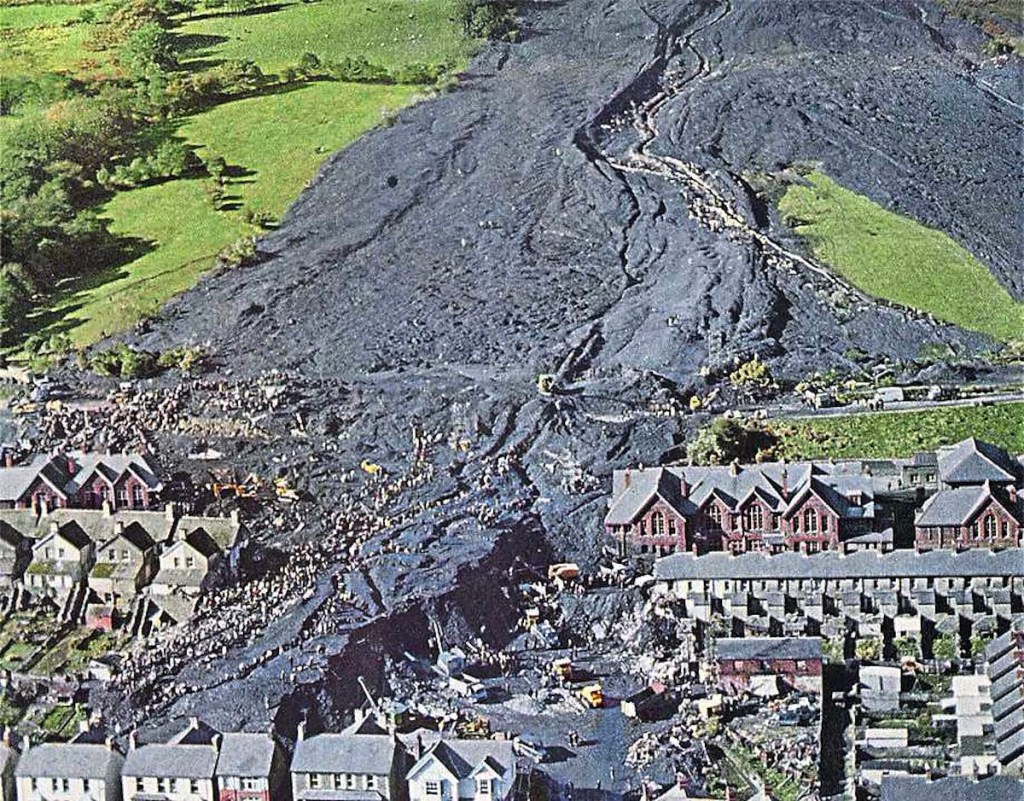
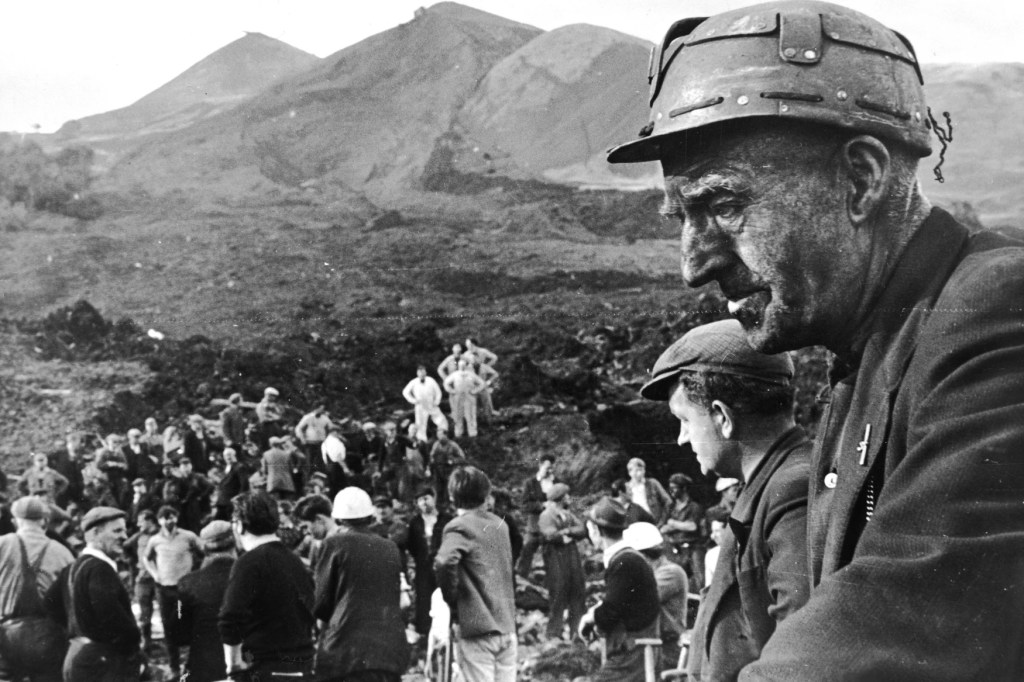
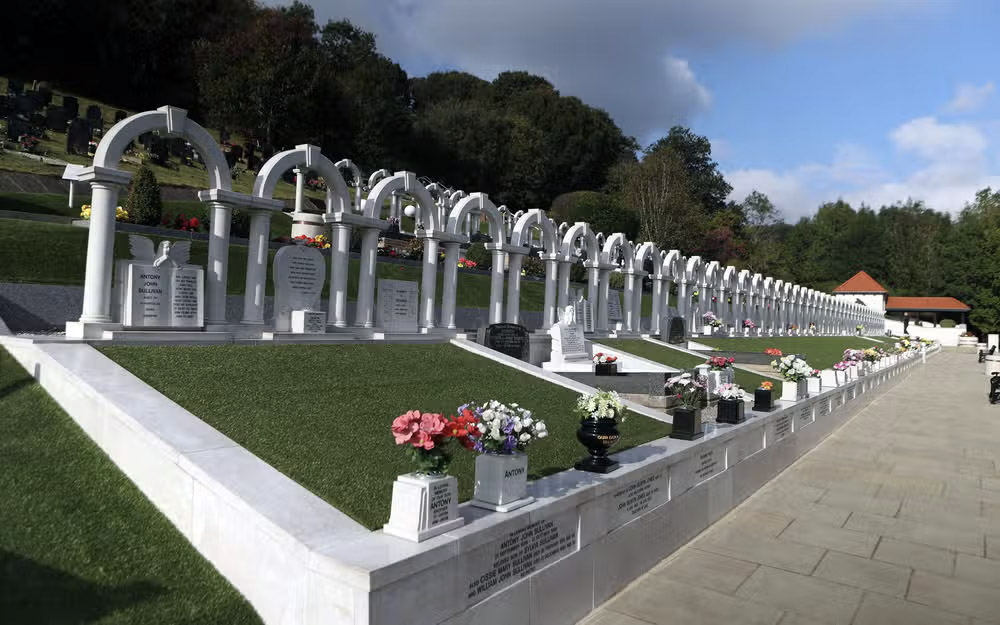
Aberfan: A single word, the name of a small village in the county of Glamorgan, Wales, which will bring immediately to mind, not only to we who are Welsh, but to millions worldwide, a single tragic picture – that of the great deluge of black slurry which at 9.13 a.m. on the morning of 21st October, 1966, slid down a hillside, engulfing everything in its path and cutting short the lives of 144 people, most of them children, as they began a new day. It is a name and an event printed indelibly on so many minds, that day on which a colliery spoil tip perched high above Aberfan stirred its unstable roots and sent a torrent of more than 150,000 tonnes of coal waste tumbling upon the village school and part of a row of houses. Here, guest-poet Gwyn Owen looks back upon the tragedy after some forty years had passed and with the lyrics of his song, Come Dance Away The Shadows, paints an inspirational picture in words. Gwyn is a writer of short stories, poems, songs, and plays. He has also written a screenplay and a young-adult novella. From his own memories, especially of that day on 21st October, he tells us:
‘I was born in Pontypridd, a town a few miles south of Aberfan, as were my parents. We left there for the then new town of Cwmbrân when I was three. But, as most of my relatives continued to live in and around Pontypridd, I visited often and always had a strong emotional attachment to the area. I was thirteen when the shadow of the Aberfan disaster darkened our lives. I will always remember how I heard of the tragic events for the first time. I was off school on the day (the half-term holidays were different in Cwmbrân and Aberfan) and that morning, my mother, as she often did, was listening to the radio. It was the BBC Home Service, which in those days broadcast through the medium of Welsh for a couple of hours a day. Although I was aware my mother listened to the Welsh broadcast, I had no Welsh myself, so paid little attention to the fact. I remember asking my mother something and her ignoring me, instead, turning to the radio and listening a little more intently. I asked my question again, a couple of times, before my mother turned to me and snapped ‘Shut up!’. Snapping at me was something she never did. Shocked, I watched her turn toward the radio again, listening intently. The tears slowly started to trickle down her cheeks. She didn’t stop crying for a few minutes, unable at the time, to tell me what she had heard. What has stayed with me ever since was, of course, the news of the tragedy itself; but also the fact that I was unable to understand my own language’.
Before coming to Gwyn’s poem, a brief overview of what others have said: because much has been written of the Aberfan disaster in verse. Notably, among others in Welsh, are poems by D. Gwenallt Jones and T. Llew Jones. In English there has been a good deal more – poems by natives of Aberfan who were there on the day, some of them relatives who, when the cataclysm came, were working their shifts underground; poems by later witnesses who assisted with the rescue operations and others, natives and strangers, who many years later were moved to put pen to paper – score upon score of all of these, from which collections have been made and published. Not many of whom wrote these were accustomed to their undertaking; but what is visible in them, as individual expressions of care and grief, is their deep heartfelt sincerity. Practised poets, also in their varying degrees of ability and technique, have made their contributions; there were ‘commissions’ to write poems for the magazine-media; similarly there were the sponsored projects of arts foundations. People are composing verse on the tragedy to this day. And for those who were most fully impacted by what occurred at Aberfan, those families which lost their loved ones on that October day, the story was to be drawn out – in the Tribunal Inquiry of the following year, and its unsatisfactory and questionable repercussions which dwell still in Welsh minds. [For succinctness, perhaps the best assessment of the legalities of the situation regarding corporate responsibility is ‘All the elements of tragedy were there’posted by Environment, Law, and History on October 24, 2016. The title is a variation of the refrain from Keidrych Rhys’ poem Aberfan: Under the Arc Lights ].

~~~~~~~~~~~~~~~
Come Dance Away The Shadows
In the quiet of the evening I hear their voices call
Come dance away the shadows one and all
Watch the fortress crumble and the highest mountain fall
Come dance away the shadows one and all
In the quiet of the evening their spirits walk abroad
Dancing with the spirit of their Lord
They offer you no promises that morning sun can’t keep
And dance away the shadows as you sleep
They call like children playing from a summer meadow green
They dance and sing like time has never been
All memory has faded and tomorrow never comes
And dance away the shadows one by one
You who fear the demons with hatred in their eyes
The prophets with their sermons and their lies
Hear the whispered voices of the children as they call
Come dance away the shadows one and all
Out there in the forest they evil shadows steal
And knowingly sing ‘all who suffer heal’
The lamb will tame the lion and the tyrant with his gun
And dance away the shadows one by one
In the quiet of the evening I hear their voices call
Come dance away the shadows one and all
Watch the fortress crumble and the highest mountain fall
Come dance away theshadows one and all
Gwyn Owen
© 2024 Gwyn Owen. All rights reserved
~~~~~~~~~~~~~~~
Those who have read a fair portion of the probably hundreds of poems inspired by Aberfan will like as not conclude that the majority present stark, emotive narratives evincing all the sorrow, devastation and helplessness surrounding this unbelievably horrific disaster, ‘Why?’ ‘Why?’ is the unavoidable, omnipresent question asked by the authors of these poems, and struggle to answer in their various ways. Speaking of his lost son, one of the many moved to record their feelings in verse says: ‘He is out playing somewhere’. And it can indeed be said that when we lose a loved one, they never quite seem gone, but perhaps somewhere hidden from us, as we are hidden from them, and they exist always in our thoughts, exactly as we remember them. We, far away now in time and many of us in distance, cannot truly know the suffering following that day. How in heaven’s name can those who were directly affected come to terms with what happened? Some illusory, hardly conceivable measure through which a kind of conciliating chapter may be reached must be all there was and is to hope for.
Come Dance Away The Shadows takes a singular approach to this grief. As a song it has a harmony drifting through it which carries us to and among the lost children, yet away from a heaviness of thought. It might occur that the picture is very much like another, and one we all know, concerning children taken into a hillside – those said to have been following the piper’s tune in the village of Hamelin seven hundred years ago. This has been noted before; it is a feature of T. Llew Jones’ Welsh poem mentioned above, and has been again noted by others in the mass of Aberfan poetry. The parallel is a relevant and poignant one, from the number of children – 130 in Hamelin – in that the German account is thought to be based on an actual event, and in that the children were taken by the mountainside. It is as though, in Gwyn’s song, the children are calling out to us in reassurance; they will dance away the shadows left on their loved ones’ and remaining lives ‘as we sleep’. In two of the later stanzas there is a note of unease, a sombre note which might lead us to the thought that their passing was indeed avoidable; or perhaps a reminder of how little account the demons which sometimes inhabit adult minds, when all life and love is taken into account, need be. The song is a gentle calling, and we are asked to listen for the voices in the hope that in our recollections we can know a child’s peace.


The Sixty-six Distillations
‘Distillations’ – These are Haikuform pieces, brief three-liners intended to express the core essence of a subject through using the most minimal sequence of words. The main heading of the article says there are sixty-six, and as it has a nice sound to it the title has been kept, although I see that on the last count there were seventy-seven; it’s possible that by now, a good while later, there are eighty-eight. The sixty-six and the nine or ten additions were written within a short period toward the end of last year and the beginning of this, when circumstances determined that my poetry-posting field should lie fallow awhile. I must have over five-hundred of these ‘distillations’ altogether; but ’the sixty-six’ were fresh recruits hurriedly mobilized to serve in an interim February article – and now it’s June. [*Of the main five-hundred, sixteen were posted under the title Medley: The Sounds, Silance, and Scenes of Open Spaces in the Aug.-Oct. 2022 section of ‘The Ig-Og’]. The term ‘distillations’ I borrowed from Clark Ashton Smith, who assisted Japanese literateur Kenneth Yasuda in his superlative study of traditional Japanese Haiku in the West, and which persuaded Smith to experiment further with minimal forms. ‘Haikuform’, ‘Haikuesque’, ‘Haikutype’ … anyone who is fully acquainted with traditional Japanese Haiku will soon see that the majority of the short pieces which appear below are not at all Haiku in the 17-syllable 5-7-5 arrangement (which continues to persist among a fair number of English language Haiku aficionados) although some may either by serendipity or with overall result in mind fall in with the pattern. Many of them, though, do conform to some of traditional Haiku’s more important – and for effect very necessary – conventions. Traditional Japanese Haiku’s adaptation into an English-language setting has not come without various transformations.
Minimal poetry demands that a great deal must be concentrated in a very small space, and a successful, truly effective economy of words is not all that easily attained. Some of those below will be seen as less successful than others. Before dipping in, then, as I hope you will, I’d just like to say this about these short and simple-seeming poems: Many of the topics are very ordinary, it’s agreed; but how often do we home in upon the core dynamism of an ordinary moment, actually take hold of it and weigh our thoughts, or half-thoughts, or fleeting sensations, or those of any passing, mundane happening? The crystallization of such moments – their intrinsic, unexpressed meaning most often overlooked – is what these short pieces are about. Some, no doubt, even with this as a goal, fall short of the mark: others, those outside the immediately experiential, such as those wholly imaginary or of flippantly humorous intent, can be seen as foxes in that fold; but If just a small number of the ’sixty-six’ cause you either to knit your brows contemplatively for a second or so, or raise a small smile, or give you the feeling of ‘Yes, that’s how is’, then I feel those will have succeeded.
Now and again in these posts I’m prone to include a word – most often a name – which by virtue of its outlandishness and hopefully its unfamiliarity to most is calculated to puzzle, the strategy being to propel the inquisitive into an impassioned investigation of the obscure (‘Victor’ and his geometric smile will almost certainly be well-known enough to be dismissed this role). Bowing, now, to a superstition about favourable and unfavourable numbers and at a final count having seen that there were indeed an inauspicious eighty-eight of these ‘distillations’, I’ve looted the original five-hundred for a further few in order to hurriedly head for ninety-nine. But just to be on the safe side – Dalmatians.
****************
Journeyman
The Shadow’s chasing you.
You have to move!
Find, poor fool, your love.
Neighbours
Mrs.Black meets
Mrs.Brown. Eyes
in every window spy.
Looking Back
Patches of sunlight.
Chances not taken – Piper, please!
A different tune …
Autumn Evening
Fields, trees, houses
stand out stark, till … gone!
The night takes hold.
Studying the Flames, and Thinking
Nice, by the fire.
Glad I’m not in it,
tied fast, screaming.
Travellers
We drift into sleep …
closed shadow-world. While Earth
ploughs deep through the void.
Loan
Winter sun
just setting – lends fire
to my face.
Roof
Cat lies on the tiles …
all swaying tail
and cunning eyes.
Accomplice
Night’s cloak, party to
the trysting of all lovers …
and all rogues.
Lost in France
School French? The natives
twig it! Why’d they reply
in rapid gibberish?
Clocktor’s Orders
My clocktor says
to get some sleep.
My book says not.
Not Invited
‘It’s really warm’,
winks the clock to the fire.
Rain hammers at the panes.
Paramour
Print’s dancing.
Please, a para more before …
Book’s on the floor.
Gatherings
We sit; we laugh.
Loved tales repeat. But
daylight hovers to go.
Ingrates?
I treat my books
respectfully. But do they care
a toss for me?
Ecstasy
Picking bogies
in the sun. Flicking them
at everyone.
Gion Geisha
Samisen
sedately tinkles. Sensual
Geisha giggles.
Not Fair!
Clocks tick in the dark.
Oi! While we’re asleep?
They gaily squander time?
Light Sketch
Grey pencil strokes
upon the world. And dawn
comes timidly.
Uprising
Ashes getting restive.
Nothing that a taste of flame
won’t tame.
Fearsome Me
Angry, swearing,
stamping upward … !
Each stair trembles.
Old Violin
Dust-filled attic…
Silence reig – Plaaanng!
Too-tautly-strung.
Bedtime Challenge
Turn off the light.
Face, fool, the secret
terrors of the night.
Spirit Moon
Mist-covered moor.
November Moon’s a
pale masked pearl.
Indifference
I spoke into the fire
of my plight. Damn flames
laughed heartily.
Herald
Quiet dawn.
Stars swept away. Then …
throbs on the horizon.
Old Garden
There, against mellow
lichened red of brick … Rich
orchard burdens ripen.
Surprise
The chisel chips. My
name’s being writ! Okay … I’ll
lie here for a bit.
Interruption
Grandfather Clock swung
tick and tock. ’Twas Time stopped
still the pendulum.
Lieutenancy
The curate comes,
subauditum – the clergy’s
duteous subaltern.
Display
Coins on
a collector’s velvet blue.
So lie the stars tonight.
Incoming
An imploration,
sky. Let me just
get home in time!
Wasted
Yes, there was the thing
called Youth. Summers
were much longer, then.
The Shortest Distance
I smiled. She smiled.
It was exactly
as good Victor said.
Interval
November’s emptiness …
The playground
when the bell has gone.
Entering the Glade
Sun strikes.
Russet shall be topaz,
Green? Why, emerald!
Rising
Near ruling Moon,
Venus, kindling silver,
wakens.
Encroachment
Writhings, small,
in glowing caves, till –
solid logs, ablaze.
Development
Happy old houses …
staring with regret
on change.
Sunday
Bells summon all.
Rooks flap and caw, all unaware
of Sunday.
All in Black
Jackdaw processions
up chapel hill? Well, I dunno,
sez Mr. Crow.
Roofscape
Streets lie shrouded.
Moonlight’s searching
roofs and chimneys.
New Llanelli
The good old town
still speaks to me … though not
to my heart anymore.
Timidity
Roomful of anger,
quarrels and shouts. Clock,
alarmed, ticks quietly.
Something to Say
Cold distance. Chill glarings
fill the room. How rude,
that deafening tick and tock!
Neighborhood Moon
Take care, you million
glitterers! The reaper’s
sickle’s poised!
Clock
The fateful finger points
and says ‘Remember!’.
Us? We giggle on.
Faint
He calls
to his dogs. The hunter who
has passed beyond the brow.
Pick and Catch
Leave flowers and butterflies
alone.
The world’s too fair. You hear?
The Compleat Astrophysicist
Once, they say, was
a great big bang. But
nobody there to tell …
Time Out
Back in The Big Bang
seconds were sent sprawling.
Clocks soon captured them.
Escapade
Firelight leaps to
ceiling’s corners. Escape
the room … ? No, no.
Seventeen Years
My brave old dog
gazed up at me … Oh! I could see
his spirit gone!
Restless
I couldn’t sleep.
The night passed by. It took
about a year.
Earthbound
Icarus, hurtling
past his dad:
‘Shut up about the Sun!’
Fireside Quiet
Firelight and silence.
A murmur, an answer.
The falling of an ember.
Play
Children clamber
in a tree. Two bump heads –
laugh helplessly.
The Defence
Draught’s brisk!
Candle-flames! Aux Armes! Stand fast
upon your wicks!
Winter’s Eve
A glow and crackling logs
within. Without
all’s chill and dumb with snow.
The Bright Side
Smile when you pay
the ferryman. He who looks like
Nosferatu.
Cares
Wind dies – then
rises; slaps me in the face.
Like hope.
Waiting
Night’s almost done.
Above, the scattered stars pale,
expectant of the sun.
Thingness
All’s a kindled fire
in every state. So stir the coals
with care.
Young Moon
Lazy Miss,
on her back, napping in
her hammock …
Desiderata
Laugh, yes, and be merry.
Be kind; show love.
Time is an outstretched hand.
Assault
Willow heaves her load
against the wind.
She’ll not give in.
The Poker’s Touch
The Master Log’s upon
the embers. The poker’s touch.
A merry blaze.
It’s Hot
Damn hot! Sleeping cats’ll
fall off windowsills. Great toads’ll
die of thirst.
Night Watch
Night waters. So, you stars?
Look down upon yourselves!
So many millions deep!
Tiddler
Ten million scattered stars
shine. Damn! My puddle’s
caught just one!
Imagination?
Dark street.
My footsteps. They sound like…
footsteps following.
Damascened
Spied, through the crowd,
a shapely, dazzling ecstasy!
Floored like Saul – that’s me.
Diadem
Gorse tops
the mound. A sleeping warrior’s crown
of gold.
What they Boast About in Valhalla
‘And last I clove the mantichore
his head. He rained hot gore.
And thus I burned and bled’.
Lull
When table-talk stops short –
that weird moment’s silence!
All swap smiles.
Journey
The lame child
limps and lingers. The lane
runs on.
Diminishing
Talk at twelve; logs spit.
Murmurs at three; red segments.
Four o’clock – the parting.
Sol Invictus
Scorching in the
veg patch. Heat waves skip along
the cabbages.
The Armada
Washing’s at hoist.
Ballooning blouses!
Knickers ahoy!
Ode to the Sun
Yield, glorious orb of gold,
go down … Don’t take
too long kow-towing, eh?
Koshtra Belorn
Her matchless contours …
created solely to compel
men’s adulation.
Glee
A silly little thing.
But our eyes met – and we laughed,
and laughed again!
Thoughts
There the mountains, there
the sea; the great sky … the
dot of life that’s me.
Linings
Soft stuff lines
li’l warblers nest: As it does
the big bad hawk’s.
Alchemy
A world once beautiful …
Transmuted thus
by wars and lust!
The Silence from Horeb
We know you like
to hide your face, but – God!
To look away!
Moody
Grate’s deep in ashes.
Embers, few. Blow on them.
They’ll glow.
Lemme Alone!
A hermit’s life for me,
I swore: Uh-oh. Not so, thought
he girl next door.
Master Rat
Young rat’s small, yet.
But, bold? Cares not a jot
for etiquette!
Small Suns
A sunless alley’s
end. There, though,
dandelions glow.
Vacant
A small house, frail,
unoccupied.
The snail long gone
Hesperides
The veil slips:
Lifts life’s colours from all
earthly things.
Stealth Merchant
Thrush, on the wall,
sings joyously. Below glides Tom,
with evil eye.
Alone
Nightfall – time
of mockeries. That tree? Those rocks?
Grim fantasies!
Ongoing
Rain beats a rhythm
to the old clock’s tick. Dark blood
courses through my veins.
Play, Weigh
As years go by
come imps
to play upon the mind.
Blackberry Picking
Lazing in the sun
high and out of reach
the best ones hung.
Those Summers
Young, standstill summers
those, my love! But the days
were running away.
Naked Moon
Keen wind unwinds
her cloud-wraps, and, undressed,
the goddess smiles.
Youth
Live, lads and lasses – now!
Heed not
the hungry ticking of the clock.
Home
The place wells up within me,
now. Like a lost love’s
whispering still.
F I N I S