Traethmawr Odyssey
Did that wave-cast wanderer feel like this when he awoke
upon that splayed Phaeacian shore?
Did sand and sunlight filter through his fingers
and did he see a sideways world
of crashing salt and sparkling foam –
this spinning, stilling, many-coloured,
sunny, sandy, shimmering world?
The plaint of gulls, the lull of waves play lilting in my ears –
I hear the things he must have heard.
Must I run the gauntlet
of Scylla and Porthstin… but that in no way fits!
Ramsey and Charyb… my senses, sleeping, still… that isn’t it…
Those low black islets – waiting: Mercy! They could… I know they house
for all their innocence, a Circe!
O Gods! I must break free! No siren song
will lure me should I wake!
Arise, fresh winds to lift me high
and fetch me to some other place – yes, look! There’s lonely Gwales’ isle –
I could go there – though for, I fear, no longer than a spell –
just biding till there’s time to spread these flashing, newborn wings
I feel will spiral me elsewhere!
Soar, man! Fly, though startled, scattered gulls protest and stare you in the eye.
High and higher still – plunge on
through rafts of cloud to airy, unimagined heights
till, when near its tented end the sky’s exultant breeze
will leave you laughing loud and clear!
Look! All Dewisland spread out!
This is my dominion: I am lord and king
of this below to shape it how I will, as suits my hand!
Five Argive ships, their sails unfurled,
windbillow in a wine-dark sea…
Carn Llidi sprawls adream, reclining giant-like
below. Will no man stir him from his counting sheep?
In scattered stones about his flanks
my fairy forts are marked out in the sun as neat as on some magic map;
and from the spreading, mazy miles of turf and tilted slab beyond
come faintest echoes of that fair folks’ lovely, long-forgotten song,
and the sweep of time-stilled harp-strings lingers on.
My mounds of gorse bloom heady gold
as far as can be spied. Where Gwyddno’s sunken kingdom rests
the lazy kelp swings with the tide. And, lo! Far at the end of the gleaming sea
all Erin’s ancient kings have sighted me and, shouting out, amazed,
are proffering brimmed cups of heather ale!
All ears and scuts the rabbits rush in distant Skomer’s ferns;
its cliffs at once a couchant, cruising and exploding mass of guillemot and tern,
and look, there’s heraldry high-perched – the parrot of the sea’s emblazoned beak.
But closer by on Ramsey’s open ocean side disguised as elongated, storm-flung stones
the morlo mermaids catch my eye when, now and then,
they shift a mite or turn, or obey the aeons’ urge to slip and slide on bellies
to the rough inviting surge.
Small crabs climb briskly over pebbles in Melgan’s rock-bound cove
while Lisgi guards the silent, passive lives that fill his tidal pools.
Concealed beneath the tablecloth, the outspread jigsaw leagues of hedge and field I hold in sway,
a thousand furry little long-tailed fellows run, and climb,
and play alongside bright-shelled snails that very slowly slide; and sharing in this
richest soil and tangled green I see the busy millions of my winged, thin-limned and fragile,
humming, spinning subjects toil: and toil away the fragments of their secret, hectic lives.
And now, aloft by many a mile, to marvel at my fiefdoms, great and small –
I poise.
But… Silence!
Do I fly or fall?
A reeling head, a sickened heart.
Held, stricken dumb and terrified,
aghast and frail and small –
I fall!
Wind rends! My breath escapes and screams!
My shattered senses fail!
A weighted sack of raven’s wine,
hurtling down, hell-bound to meet
an unsung end in the senseless deep –
a sea, a sea with my good red blood
a stain in the drifting tides!
Three miles, two – one only – still dropping like a stone!
Gods! White-caps shock the splintered rocks below…
incisors and the maelstrom both whirling round and round.
Yes, Scylla and that other one – I see you clearly, now:
Some knavish laugh-crazed look-out in my mind shouts ‘Land Ahoy!’
So the Bitches will have me after all.
Then let it be… Make space there, Icarus, my boy!
Then – gentleness. No rushing near,
no blinding sear, but – gentleness.
And a world of crashing salt and sparkling waves,
spinning, stilling, many-coloured,
sunny, sandy, gladly wakening world
in Ithaca that’s Wales.
(From ‘Memories, Moods, Reflections’ )
Note: It was intended that this dream sequence be accompanied by a hefty raft of words, but in these days of long-honours on the chin and creaking in the jimmers, I’ll be glad for once to give all such addenda a pass. Suffice to say it’s trusted that the scattering of classical/mythological puns and innuendos, whether Hellenic or Cymric, won’t be missed, nor the intimacy of homed-in topological detail. The anointed will need no clues. To get most out of the poem it’s best if the reader is familiar with that magical peninsula where the very stones of the shore are an episcopal purple – that Dewisland which is bordered in the east by the sprawled dyke of Ffôs y Mynach, and by the wild ramparts of Penmaen Dewi in the west. There is much more that the poem could say of that land of castellated upthrusts of grey-white dolerite, and brooks which fret and gurgle to the sea, and the whole capsized calligraphy of its landscape; there are some dozen lines, I’m sure, which need still to be included.
This is an extended and reworked version of a poem written all of sixty years ago, bar one. It appeared in Wales’ premier literary magazine of the time, and this then young pen-pusher was pleased as Punch to see that it was nicely placed in the table of contents as the third entry, immediately below two poems by R.S. Thomas and Alun Lewis’ letters to Robert Graves. Those were the days.
Tag: wales
A Song for Aberfan
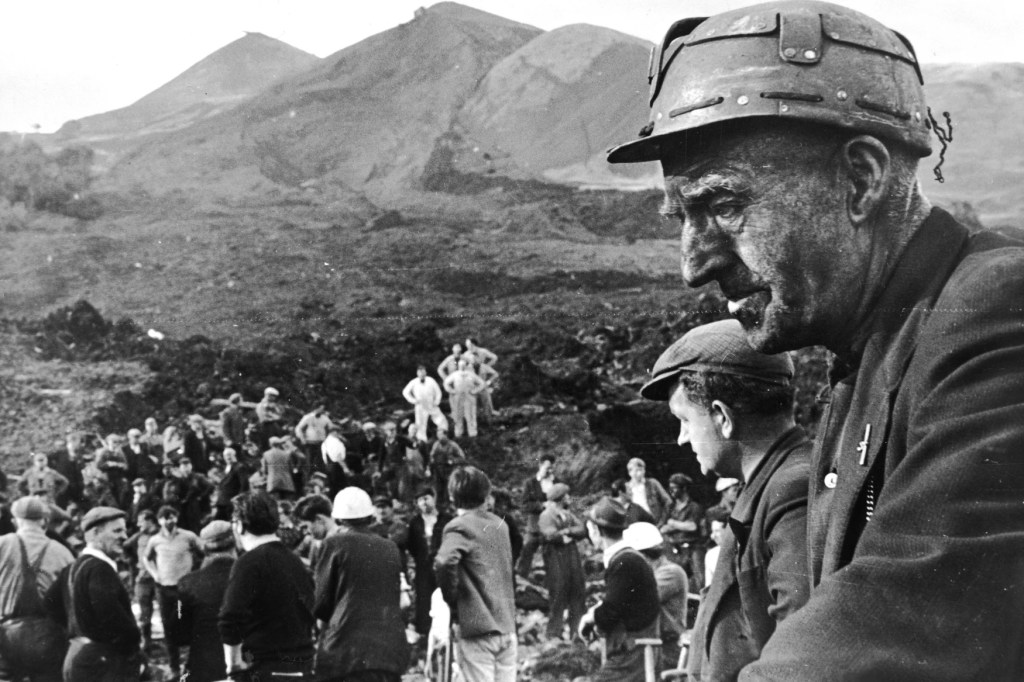
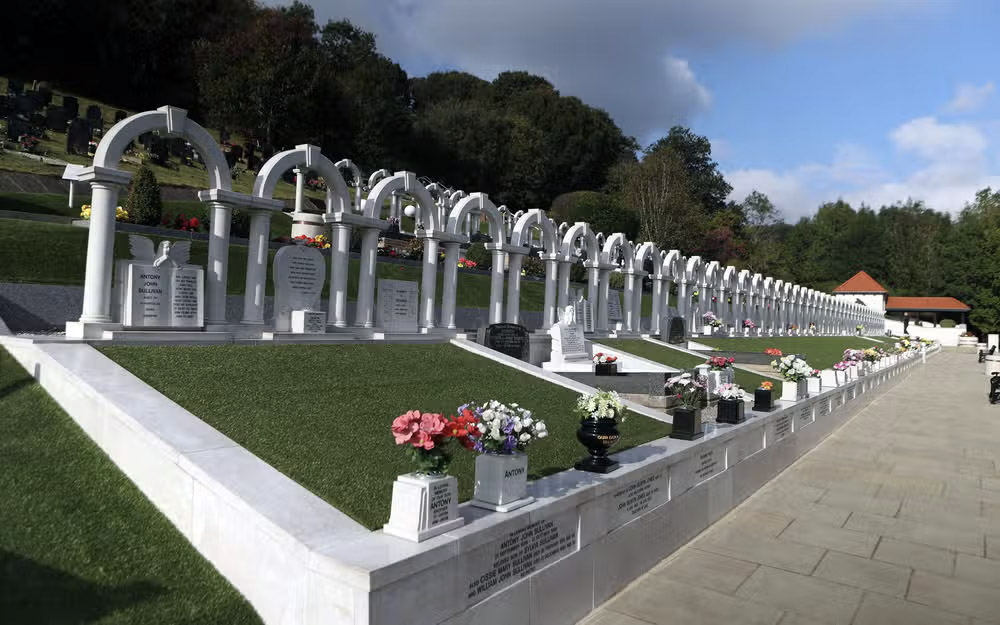
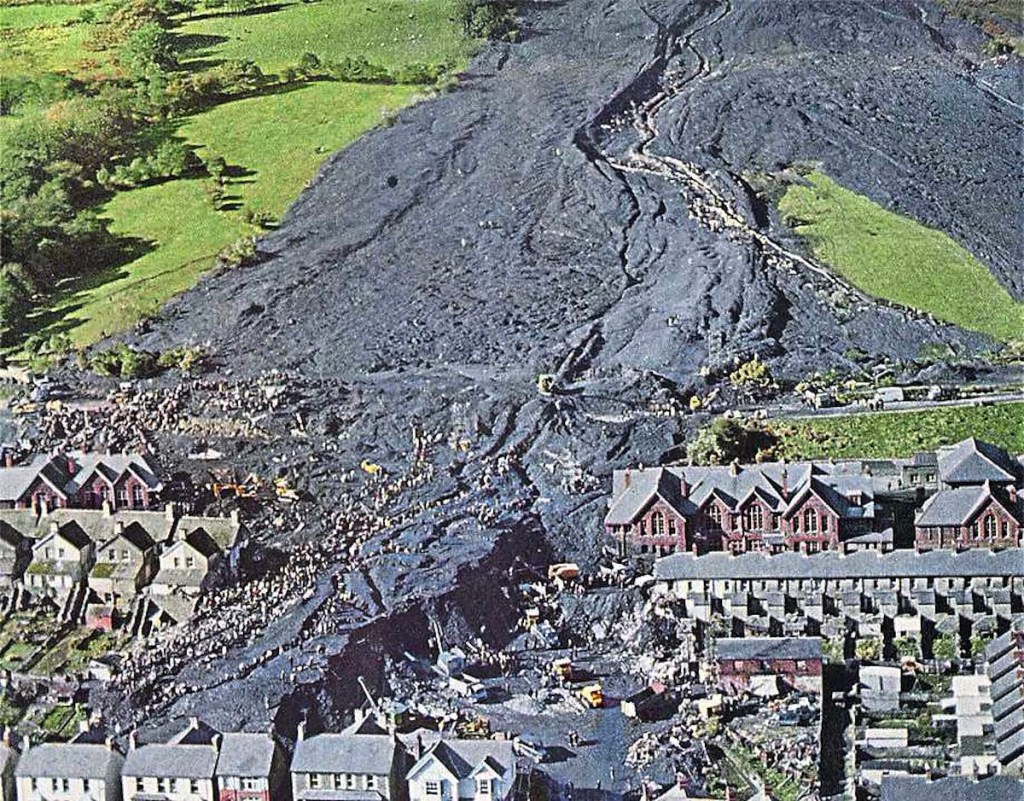
Aberfan: A single word, the name of a small village in the county of Glamorgan, Wales, which will bring immediately to mind, not only to we who are Welsh, but to millions worldwide, a single tragic picture – that of the great deluge of black slurry which at 9.13 a.m. on the morning of 21st October, 1966, slid down a hillside, engulfing everything in its path and cutting short the lives of 144 people, most of them children, as they began a new day. It is a name and an event printed indelibly on so many minds, that day on which a colliery spoil tip perched high above Aberfan stirred its unstable roots and sent a torrent of more than 150,000 tonnes of coal waste tumbling upon the village school and part of a row of houses. Here, guest-poet Gwyn Owen looks back upon the tragedy after some forty years had passed and with the lyrics of his song, Come Dance Away The Shadows, paints an inspirational picture in words. Gwyn is a writer of short stories, poems, songs, and plays. He has also written a screenplay and a young-adult novella. From his own memories, especially of that day on 21st October, he tells us:
‘I was born in Pontypridd, a town a few miles south of Aberfan, as were my parents. We left there for the then new town of Cwmbrân when I was three. But, as most of my relatives continued to live in and around Pontypridd, I visited often and always had a strong emotional attachment to the area. I was thirteen when the shadow of the Aberfan disaster darkened our lives. I will always remember how I heard of the tragic events for the first time. I was off school on the day (the half-term holidays were different in Cwmbrân and Aberfan) and that morning, my mother, as she often did, was listening to the radio. It was the BBC Home Service, which in those days broadcast through the medium of Welsh for a couple of hours a day. Although I was aware my mother listened to the Welsh broadcast, I had no Welsh myself, so paid little attention to the fact. I remember asking my mother something and her ignoring me, instead, turning to the radio and listening a little more intently. I asked my question again, a couple of times, before my mother turned to me and snapped ‘Shut up!’. Snapping at me was something she never did. Shocked, I watched her turn toward the radio again, listening intently. The tears slowly started to trickle down her cheeks. She didn’t stop crying for a few minutes, unable at the time, to tell me what she had heard. What has stayed with me ever since was, of course, the news of the tragedy itself; but also the fact that I was unable to understand my own language’.
Before coming to Gwyn’s poem, a brief overview of what others have said: because much has been written of the Aberfan disaster in verse. Notably, among others in Welsh, are poems by D. Gwenallt Jones and T. Llew Jones. In English there has been a good deal more – poems by natives of Aberfan who were there on the day, some of them relatives who, when the cataclysm came, were working their shifts underground; poems by later witnesses who assisted with the rescue operations and others, natives and strangers, who many years later were moved to put pen to paper – score upon score of all of these, from which collections have been made and published. Not many of whom wrote these were accustomed to their undertaking; but what is visible in them, as individual expressions of care and grief, is their deep heartfelt sincerity. Practised poets, also in their varying degrees of ability and technique, have made their contributions; there were ‘commissions’ to write poems for the magazine-media; similarly there were the sponsored projects of arts foundations. People are composing verse on the tragedy to this day. And for those who were most fully impacted by what occurred at Aberfan, those families which lost their loved ones on that October day, the story was to be drawn out – in the Tribunal Inquiry of the following year, and its unsatisfactory and questionable repercussions which dwell still in Welsh minds. [For succinctness, perhaps the best assessment of the legalities of the situation regarding corporate responsibility is ‘All the elements of tragedy were there’posted by Environment, Law, and History on October 24, 2016. The title is a variation of the refrain from Keidrych Rhys’ poem Aberfan: Under the Arc Lights ].
~~~~~~~~~~~~~~~
Come Dance Away The Shadows
In the quiet of the evening I hear their voices call
Come dance away the shadows one and all
Watch the fortress crumble and the highest mountain fall
Come dance away the shadows one and all
In the quiet of the evening their spirits walk abroad
Dancing with the spirit of their Lord
They offer you no promises that morning sun can’t keep
And dance away the shadows as you sleep
They call like children playing from a summer meadow green
They dance and sing like time has never been
All memory has faded and tomorrow never comes
And dance away the shadows one by one
You who fear the demons with hatred in their eyes
The prophets with their sermons and their lies
Hear the whispered voices of the children as they call
Come dance away the shadows one and all
Out there in the forest they evil shadows steal
And knowingly sing ‘all who suffer heal’
The lamb will tame the lion and the tyrant with his gun
And dance away the shadows one by one
In the quiet of the evening I hear their voices call
Come dance away the shadows one and all
Watch the fortress crumble and the highest mountain fall
Come dance away theshadows one and all
Gwyn Owen
© 2024 Gwyn Owen. All rights reserved
~~~~~~~~~~~~~~~
Those who have read a fair portion of the probably hundreds of poems inspired by Aberfan will like as not conclude that the majority present stark, emotive narratives evincing all the sorrow, devastation and helplessness surrounding this unbelievably horrific disaster, ‘Why?’ ‘Why?’ is the unavoidable, omnipresent question asked by the authors of these poems, and struggle to answer in their various ways. Speaking of his lost son, one of the many moved to record their feelings in verse says: ‘He is out playing somewhere’. And it can indeed be said that when we lose a loved one, they never quite seem gone, but perhaps somewhere hidden from us, as we are hidden from them, and they exist always in our thoughts, exactly as we remember them. We, far away now in time and many of us in distance, cannot truly know the suffering following that day. How in heaven’s name can those who were directly affected come to terms with what happened? Some illusory, hardly conceivable measure through which a kind of conciliating chapter may be reached must be all there was and is to hope for.
Come Dance Away The Shadows takes a singular approach to this grief. As a song it has a harmony drifting through it which carries us to and among the lost children, yet away from a heaviness of thought. It might occur that the picture is very much like another, and one we all know, concerning children taken into a hillside – those said to have been following the piper’s tune in the village of Hamelin seven hundred years ago. This has been noted before; it is a feature of T. Llew Jones’ Welsh poem mentioned above, and has been again noted by others in the mass of Aberfan poetry. The parallel is a relevant and poignant one, from the number of children – 130 in Hamelin – in that the German account is thought to be based on an actual event, and in that the children were taken by the mountainside. It is as though, in Gwyn’s song, the children are calling out to us in reassurance; they will dance away the shadows left on their loved ones’ and remaining lives ‘as we sleep’. In two of the later stanzas there is a note of unease, a sombre note which might lead us to the thought that their passing was indeed avoidable; or perhaps a reminder of how little account the demons which sometimes inhabit adult minds, when all life and love is taken into account, need be. The song is a gentle calling, and we are asked to listen for the voices in the hope that in our recollections we can know a child’s peace.